Stroke Rehabilitation at Home in Bangalore
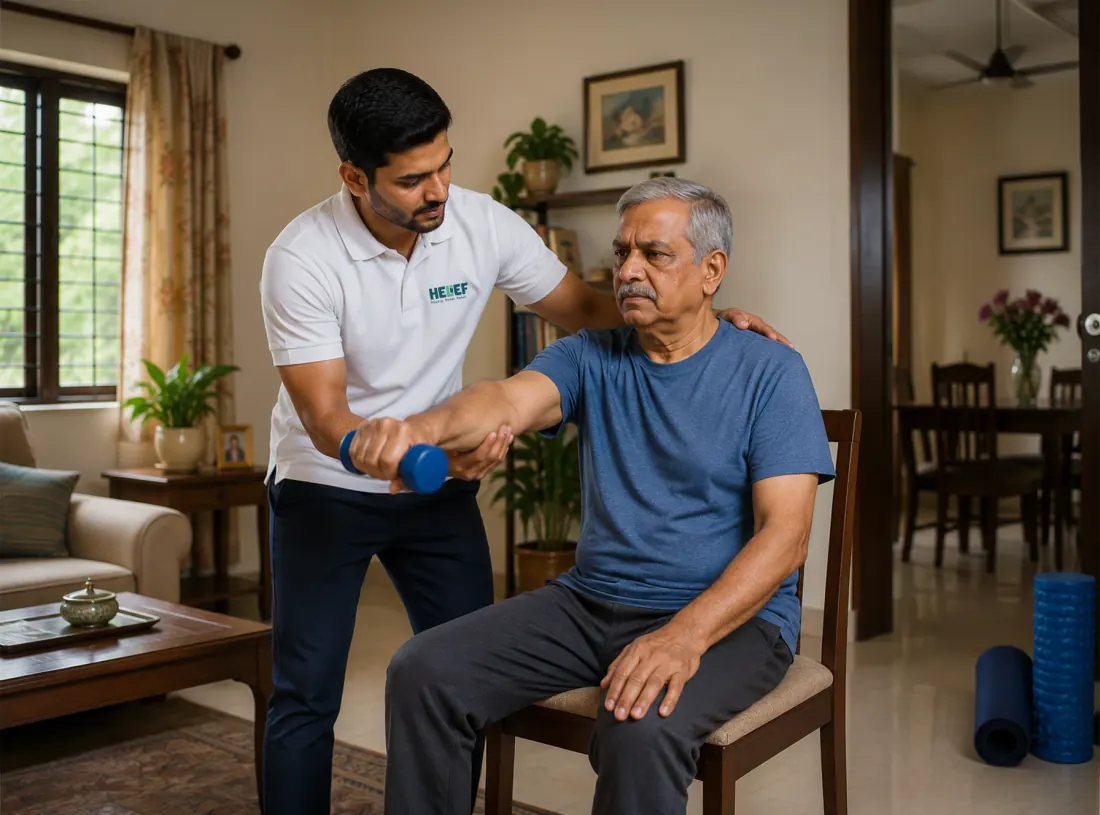
Recovery after a stroke is a long road — and it's the consistent, day-after-day rehabilitation that rebuilds movement, not any single session. Our certified neuro physiotherapists bring that consistency to your home in Bangalore, helping your loved one regain strength, balance, and independence without the strain of clinic trips.
- 5-Star Rated
- 100+ Happy Patients
- Certified Physiotherapists
Certified Physiotherapists
Verified & background-checked
Quick answer
Stroke rehabilitation physiotherapy helps the brain and body relearn movement through consistent, repetition-based training — rebuilding walking, arm use, balance, and daily independence. Progress is gradual and varies by person, but frequent, sustained rehab is what drives it, and home-based care makes that frequency achievable.
Understanding it
What is stroke rehabilitation?
A stroke happens when blood flow to part of the brain is interrupted, damaging the areas that control movement, balance, speech, or sensation. What follows — weakness down one side (hemiplegia or hemiparesis), difficulty walking, poor balance, or a arm and hand that won't cooperate — is not fixed. The brain can rewire and relearn, a process called neuroplasticity, and that is what rehabilitation drives.
Physiotherapy after a stroke is built around repetition: practising the movements the brain needs to relearn, over and over, at the right level of challenge. The goal isn't a single dramatic recovery but steady, cumulative gains — sitting, standing, walking, using the affected arm, and rebuilding the independence and dignity that a stroke takes away.
Common symptoms
- Weakness or paralysis down one side of the body (hemiplegia / hemiparesis)
- Difficulty walking, or an unsteady, effortful gait
- Poor balance and a high risk of falls
- An affected arm or hand that is hard to use
- Muscle stiffness or spasticity that pulls limbs into tight positions
- Loss of confidence and reduced independence in daily tasks
Common causes
- Ischaemic stroke — a clot blocking blood flow to the brain (most common)
- Haemorrhagic stroke — bleeding in or around the brain
- A transient ischaemic attack (TIA / 'mini-stroke') as a warning sign
- High blood pressure, the biggest risk factor for stroke
- Diabetes, high cholesterol, or heart conditions
- Smoking and other lifestyle factors
Risk factors
What raises the likelihood
Don't wait it out
When to see a physiotherapist
If any of these sound familiar, an assessment is worth booking. Treating it early usually means a faster, fuller recovery.
As early as possible after the stroke — early rehabilitation strongly improves recovery
If your loved one was discharged with little or no ongoing therapy
If progress has plateaued and you want to restart structured rehab
If clinic visits are too exhausting to keep up consistently
At any stage — meaningful gains are still possible months or years on
Seek medical care first
These signs need a doctor or emergency care — not physiotherapy. Please get urgent medical attention if you notice:
- Signs of a new or recurrent stroke — face drooping, arm weakness, or speech difficulty (call emergency services immediately — think F.A.S.T.)
- A sudden severe headache, confusion, or loss of consciousness
- New difficulty swallowing, choking, or breathing
- A hot, swollen, painful calf (possible blood clot / DVT)
Our approach
How Helief treats stroke rehabilitation at home
Every plan starts with a careful assessment of exactly what the stroke has affected — movement, strength, tone, balance, and which everyday tasks matter most to the patient and family. Because stroke recovery is so individual, this assessment is what makes the rehabilitation targeted rather than generic, and we set honest, meaningful goals from it.
From there, we use repetition-based movement retraining to help the brain relearn — guided exercises that rebuild sitting, standing, walking, and use of the affected side — alongside spasticity management and balance work. Crucially, we coach the family to support safe practice between visits, because the frequency and consistency of that practice is what drives recovery over the months ahead.
Treatment techniques
Evidence-based methods we use
Repetition-based movement retraining
Task-specific, repeated practice of everyday movements — the core of how the brain relearns after a stroke.
Gait (walking) retraining
Rebuilding a safe, confident walking pattern step by step, reducing reliance on support as ability returns.
Balance & fall prevention
Targeted balance work to keep the patient steady and safe — a major priority after a stroke.
Spasticity & positioning management
Stretching, positioning, and movement to manage stiffness and prevent contractures in the affected limbs.
Affected-arm & hand rehabilitation
Focused work to restore movement and function in the affected arm and hand, often the slowest to recover.
Family coaching
Teaching the family safe handling and how to support daily practice — the multiplier that drives progress.
Recovery timeline
What progress typically looks like
Every recovery is individual — this is a general guide, not a guarantee. Your physiotherapist sets realistic milestones after the first assessment.
- 1Early weeks
Protect, position, activate
Early rehab focuses on safe positioning, preventing complications, and beginning to activate movement on the affected side.
- 2First 3–6 months
The key recovery window
Often the fastest period of recovery — intensive, consistent retraining of sitting, standing, walking, and arm use.
- 36–12 months
Build strength & function
Continued gains in strength, balance, and independence, working toward the daily tasks that matter most.
- 4Beyond a year
Maintain & keep improving
Meaningful improvement is still possible well beyond the first year with sustained, purposeful practice.
Why at home
The advantage of treating stroke rehabilitation at home
Consistent, frequent sessions — the single biggest factor in stroke recovery — without exhausting clinic trips
Rehabilitation happens in the real environment where the patient must relearn to move and live
The family is coached to support safe daily practice between visits
Familiar surroundings reduce fatigue and disorientation, so the patient engages better
Certified physiotherapists, clinical standards, delivered at home
Every stroke rehabilitation treatment plan is delivered by a qualified, vetted physiotherapist following proper assessment and safety protocols — built around your goals and paced to your recovery.
Book Now
Start stroke rehabilitation treatment at home
Share your details and we'll call you back to arrange a home visit across Bangalore. A certified physiotherapist assesses the cause before any treatment begins.
Locations we serve
Stroke Rehabilitation physiotherapy across Bangalore
Our certified physiotherapists visit homes right across the city. Pick your area, or message us to check availability near you.
Not on the list? WhatsApp us — we cover much of Bangalore.
FAQ
Stroke Rehabilitation — your questions
Related conditions
You may also be looking for
Paralysis
Restoring movement, preventing complications, and rebuilding independence after paralysis — at home.
Learn MoreParkinson's Disease
Maintaining movement, balance, and independence with Parkinson's — through home physiotherapy.
Learn MoreBell's Palsy
Facial retraining to restore movement and symmetry after Bell's palsy — at home.
Learn MoreMultiple Sclerosis
Managing fatigue, balance, and mobility with MS — through home physiotherapy.
Learn MoreStart your recovery journey this week
Book a home visit and let a certified physiotherapist come to you — no travel, no waiting rooms.