Post-Hospitalisation Physiotherapy at Home
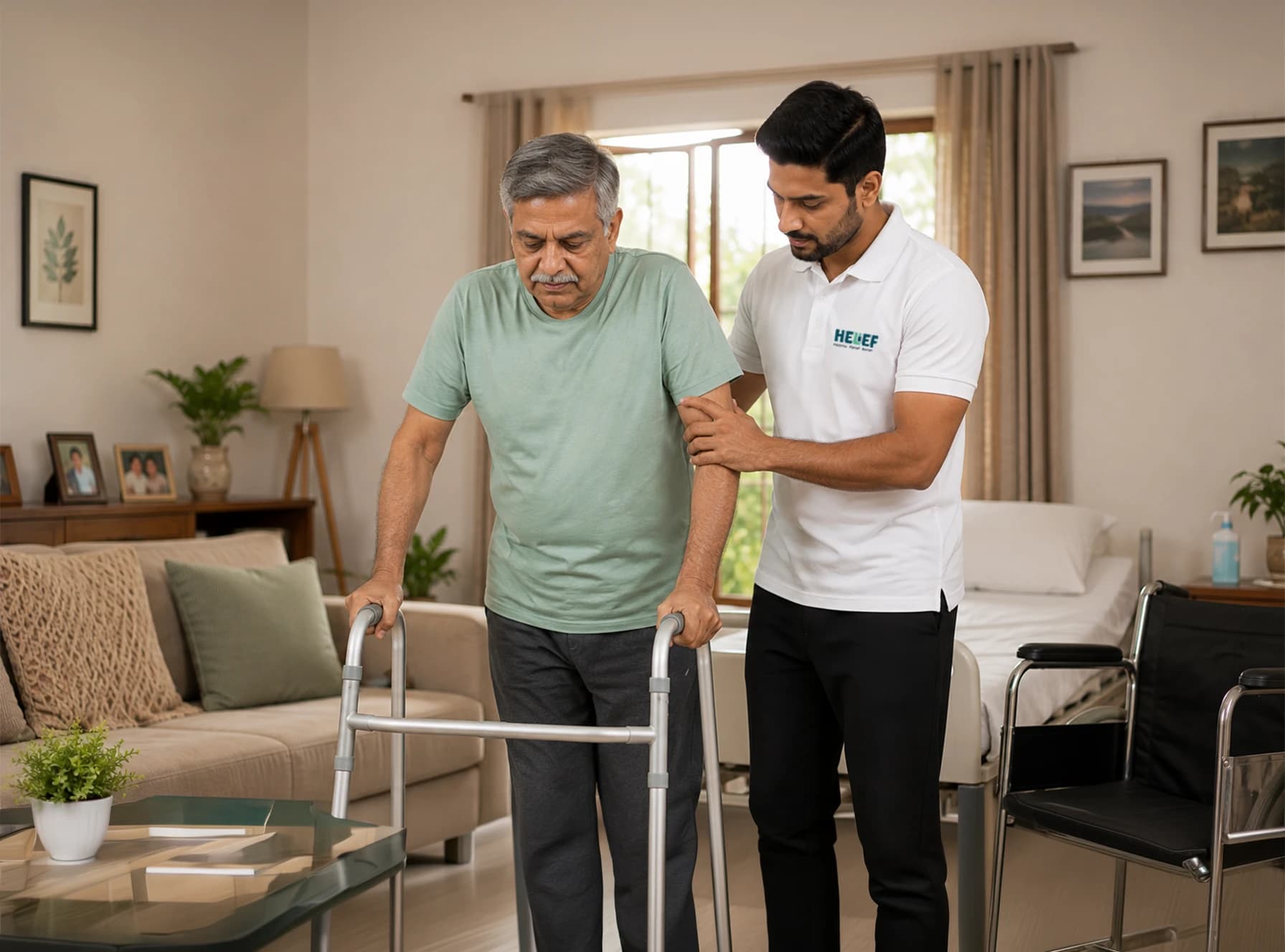
After a hospital stay, many elderly patients come home weaker, unsteady, and lacking confidence — even if the original problem is treated. Our certified physiotherapists rebuild that lost strength and mobility at home in Bangalore, safely.
- 5-Star Rated
- 100+ Happy Patients
- Certified Physiotherapists
Certified Physiotherapists
Verified & background-checked
Quick answer
Physiotherapy after a hospital stay reverses deconditioning — the loss of strength, balance, and stamina that comes from days in bed. Through safe, graded reconditioning at home, it rebuilds mobility and confidence, helps elderly patients return to independence, and reduces the risk of falls and readmission.
Understanding it
What is post-hospitalisation recovery?
Even a short hospital stay can leave an older person markedly weaker. Days spent mostly in bed cause rapid loss of muscle, balance, and stamina — a problem so common it has a name: hospital-associated deconditioning. People often come home unsteady, exhausted by simple tasks, and shaken in confidence, even when the illness or surgery that took them in has been successfully treated.
This decline is very treatable. Physiotherapy provides the safe, structured reconditioning that rebuilds the strength, mobility, and stamina lost during the stay. Starting soon after discharge matters: it speeds recovery, restores independence, reduces the risk of falls, and helps prevent the readmissions that deconditioning so often leads to.
Signs of deconditioning after hospital
- Noticeably weaker and less steady than before the hospital stay
- Tiring quickly, with little stamina for everyday activity
- Struggling to walk, climb stairs, or get up from a chair or bed
- Loss of confidence and a new fear of falling
- Needing more help with washing, dressing, and moving around
- Feeling low or discouraged by the loss of independence
Why hospital stays cause decline
- Prolonged bed rest and inactivity during the hospital stay
- Rapid muscle loss from days of not moving
- The illness, infection, or surgery that led to admission
- Reduced appetite and nutrition while unwell
- Disrupted sleep and, sometimes, episodes of confusion in hospital
- Loss of confidence and momentum after being unwell
Recovering fully
What slows recovery
Don't wait it out
When to see a physiotherapist
If any of these sound familiar, an assessment is worth booking. Treating it early usually means a faster, fuller recovery.
As soon as possible after discharge, to start recovery early
If your parent has come home weaker or less steady than before
If walking, stairs, or getting up are now a struggle
If they are doing less and losing confidence at home
If there's worry about a fall or another hospital admission
Seek medical care first
These signs need a doctor or emergency care — not physiotherapy. Please get urgent medical attention if you notice:
- Fever, worsening pain, a wound problem, or signs the original illness is returning (contact the medical team)
- New calf pain or swelling, or sudden breathlessness or chest pain (possible clot — seek urgent care)
- A fall causing injury or inability to bear weight
- A sudden decline in alertness or new confusion (may signal infection — seek medical review)
Our approach
How Helief treats post-hospitalisation recovery at home
We start with a gentle assessment of strength, balance, walking, and stamina, and how your parent is coping with daily tasks at home after discharge — while staying alert to any medical concerns that need the hospital team. We set realistic, encouraging goals with the family, aimed at getting back to how things were before the admission.
From there the work is graded reconditioning: progressive strengthening, balance and walking practice, and endurance building, all paced to someone who has been unwell and tires easily. We rebuild confidence step by step, advise on nutrition and safe movement, and coach the family — steadily restoring independence and reducing the risk of falls and readmission.
Treatment techniques
Evidence-based methods we use
Graded reconditioning
Safe, progressive exercise that rebuilds the strength and stamina lost during the hospital stay, paced to recovery.
Strength rebuilding
Targeted strengthening to reverse the muscle loss from bed rest and make everyday tasks manageable again.
Balance & gait retraining
Balance and walking practice to restore steady, confident movement and reduce the raised risk of falls.
Endurance building
Gentle, graded activity to rebuild stamina and reduce the fatigue that follows a hospital stay.
Confidence & independence work
Rehearsing daily activities so your parent regains the confidence to manage at home again.
Family & carer coaching
Guiding the family on safe support, movement, and nutrition to keep recovery on track between visits.
Recovery timeline
What progress typically looks like
Every recovery is individual — this is a general guide, not a guarantee. Your physiotherapist sets realistic milestones after the first assessment.
- 1First days home
Assess & get moving safely
An early assessment after discharge and gentle activity to get your parent moving safely and prevent further decline.
- 2Weeks 1–4
Rebuild strength & balance
Progressive strengthening and balance work that steadily reverses the deconditioning from the hospital stay.
- 3Weeks 4–8
Restore stamina & confidence
Building endurance and confident walking so daily life and independence return.
- 4Ongoing
Back to normal & staying well
Consolidating gains and a maintenance routine to keep strength up and reduce the risk of another admission.
Why at home
The advantage of treating post-hospitalisation recovery at home
Recovery starts promptly at home, right after discharge, when it matters most
No tiring or risky travel for someone still weak from a hospital stay
Rehabilitation is matched to your parent's real home and daily tasks
Family are coached to support safe movement and prevent readmission
Certified physiotherapists, clinical standards, delivered at home
Every post-hospitalisation recovery treatment plan is delivered by a qualified, vetted physiotherapist following proper assessment and safety protocols — built around your goals and paced to your recovery.
Book Now
Start post-hospitalisation recovery treatment at home
Share your details and we'll call you back to arrange a home visit across Bangalore. A certified physiotherapist assesses the cause before any treatment begins.
Locations we serve
Post-Hospitalisation Recovery physiotherapy across Bangalore
Our certified physiotherapists visit homes right across the city. Pick your area, or message us to check availability near you.
Not on the list? WhatsApp us — we cover much of Bangalore.
FAQ
Post-Hospitalisation Recovery — your questions
Related conditions
You may also be looking for
Frailty & Weakness
Rebuilding strength and stamina to reverse age-related decline and protect independence.
Learn MoreBalance Problems & Falls
Rebuilding steadiness, strength, and confidence so a fall doesn't take away independence.
Learn MoreWalking Difficulty
Retraining how your parent walks — steadier steps, longer distances, and less reliance on furniture.
Learn MoreFracture Recovery
Rebuilding movement and strength after a fracture or fixation surgery — at home in Bangalore.
Learn MoreStroke Rehabilitation
Rebuilding movement, strength, and independence after a stroke — at home in Bangalore.
Learn MoreStart your recovery journey this week
Book a home visit and let a certified physiotherapist come to you — no travel, no waiting rooms.