Fracture Recovery at Home in Bangalore
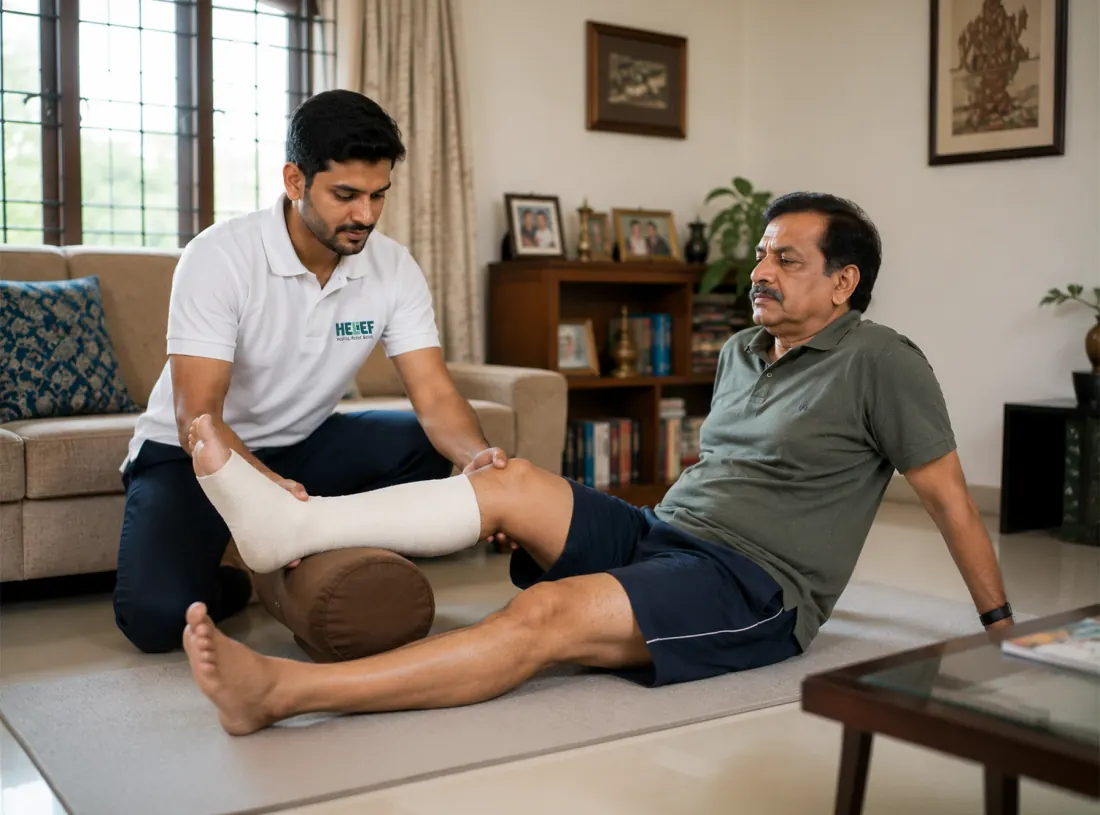
After a fracture heals, the joint is often stiff, the muscles weak, and normal movement hard to trust again. Our certified physiotherapists bring safe, structured rehabilitation to your home in Bangalore — restoring movement, strength, and confidence once the bone has healed.
- 5-Star Rated
- 100+ Happy Patients
- Certified Physiotherapists
Certified Physiotherapists
Verified & background-checked
Quick answer
Fracture recovery physiotherapy restores the movement, strength, and function lost while a fracture healed — whether it was managed in a cast or with fixation surgery (plates, screws, or rods). Rehab is guided by the fracture's healing stage and the surgeon's advice, and delivering it at home makes it easier to rebuild everyday function safely.
Understanding it
What is fracture recovery?
A fracture is a broken bone, treated either conservatively (in a cast or brace) or with surgery — fixation using plates, screws, rods, or wires to hold the bone while it heals. Either way, the period of immobility that healing requires leaves the surrounding joint stiff and the muscles weakened.
Physiotherapy after a fracture restores what that immobility took away: the joint's range of movement, the strength of the muscles around it, and the confidence to use the limb normally again. The timing is guided by how the bone is healing and by your surgeon's advice — moving too early can risk the healing, while waiting too long lets stiffness and weakness set in.
What recovery involves
- Stiffness and reduced movement in the affected joint
- Weakness and visible wasting of the surrounding muscles
- Swelling that lingers after the cast or fixation
- Difficulty bearing weight or using the limb normally
- Reduced confidence trusting the healed bone
- An altered walking pattern after a leg or foot fracture
Common types of fracture
- Wrist and forearm fractures (often from a fall onto an outstretched hand)
- Ankle and foot fractures
- Hip fractures (common in older adults after a fall)
- Shoulder and upper-arm fractures
- Fractures around the knee, leg, or elbow
- Fractures fixed surgically with plates, screws, rods, or wires
Your recovery
What affects your recovery
Getting started
When to start rehabilitation
If any of these sound familiar, an assessment is worth booking. Treating it early usually means a faster, fuller recovery.
Once your cast is removed or your surgeon clears rehabilitation
If the joint is stiff and movement isn't returning
If the surrounding muscles are weak or wasted
If you're hesitant to bear weight or use the limb
If you were discharged without a rehabilitation plan
Seek medical care first
These signs need a doctor or emergency care — not physiotherapy. Please get urgent medical attention if you notice:
- Increasing pain, swelling, or deformity at the fracture site (possible healing problem)
- Fever, or a wound that is hot, red, opening, or leaking (possible infection)
- New numbness, pins-and-needles, or weakness beyond the injury
- Calf pain and swelling after a leg fracture, or chest pain/breathlessness (seek urgent care)
Our approach
How Helief treats fracture recovery at home
Every plan starts by understanding your fracture, how it was managed, and where it is in healing — and by respecting any weight-bearing or movement restrictions your surgeon has set. We never load a bone before it's ready, but we also make sure you don't lose the window to restore movement once it's safe, because stiffness sets in quickly after immobility.
From there we combine range-of-movement recovery, progressive strengthening, and — for leg, foot, and hip fractures — gait and balance retraining. We rebuild the specific functions you need, whether that's gripping and lifting after a wrist fracture or confident walking after an ankle or hip fracture, and progress the plan as the bone and tissues allow.
Treatment techniques
Evidence-based methods we use
Range-of-movement recovery
Careful work to restore the movement lost to immobility, started as soon as it's safe to protect against lasting stiffness.
Progressive strengthening
Rebuilding the weakened and wasted muscles around the healed bone, loaded gradually as healing allows.
Swelling & scar management
Settling residual swelling and, after fixation surgery, keeping the scar and tissues mobile.
Gait & balance retraining
For leg, foot, and hip fractures, rebuilding a safe, confident walking pattern and steadiness.
Functional & grip retraining
Restoring the real tasks the limb needs to do — gripping, lifting, reaching, walking, or climbing stairs.
Weight-bearing progression
Safely and progressively loading the limb in step with your surgeon's clearance.
Recovery timeline
What progress typically looks like
Every recovery is individual — this is a general guide, not a guarantee. Your physiotherapist sets realistic milestones after the first assessment.
- 1Immobilisation phase
Protect & maintain
While the bone heals, we keep the surrounding joints and muscles as mobile and strong as is safe.
- 2Early rehab
Restore movement
Once cleared, careful range-of-movement work reverses the stiffness that immobility caused.
- 3Strengthening phase
Rebuild strength & loading
Progressive strengthening and, for the legs, graded weight-bearing to restore capacity.
- 4Return to function
Back to daily life
Rebuilding the specific tasks and confidence you need, and maintaining strength long-term.
Why at home
The advantage of treating fracture recovery at home
No awkward travel with a healing limb, cast, or crutches
Your physiotherapist adapts rehab to your actual home, stairs, and daily tasks
One-on-one attention that rebuilds confidence to use the limb again
Family guided on safe support, especially for older adults after a hip fracture
Certified physiotherapists, clinical standards, delivered at home
Every fracture recovery treatment plan is delivered by a qualified, vetted physiotherapist following proper assessment and safety protocols — built around your goals and paced to your recovery.
Book Now
Start fracture recovery treatment at home
Share your details and we'll call you back to arrange a home visit across Bangalore. A certified physiotherapist assesses the cause before any treatment begins.
Locations we serve
Fracture Recovery physiotherapy across Bangalore
Our certified physiotherapists visit homes right across the city. Pick your area, or message us to check availability near you.
Not on the list? WhatsApp us — we cover much of Bangalore.
FAQ
Fracture Recovery — your questions
Related conditions
You may also be looking for
Hip Replacement
Safe, guided rehabilitation after a hip replacement — restoring walking and independence at home.
Learn MoreKnee Replacement
Structured, safe rehabilitation after a total knee replacement — at home in Bangalore.
Learn MoreSpine Surgery
Careful, guided rehabilitation after back or neck surgery — rebuilding movement and confidence at home.
Learn MoreHip Pain
Ease hip pain and stiffness and move with ease again — treated at home.
Learn MoreStart your recovery journey this week
Book a home visit and let a certified physiotherapist come to you — no travel, no waiting rooms.