Physiotherapy for Frailty & Weakness at Home
When an elderly parent slowly grows weaker, tires easily, and does less, it can feel like unavoidable ageing — but much of it can be turned around. Our certified physiotherapists rebuild strength and stamina at home in Bangalore, protecting independence.
- 5-Star Rated
- 100+ Happy Patients
- Certified Physiotherapists
Certified Physiotherapists
Verified & background-checked
Quick answer
Physiotherapy for frailty and age-related weakness rebuilds muscle strength, stamina, and balance through safe, progressive exercise. Much of the decline older adults experience is from lost muscle and reduced activity — not ageing alone — and it responds well to training, restoring mobility, energy, and independence.
Understanding it
What is frailty & weakness?
Frailty is a state of reduced strength, stamina, and resilience that makes an older person more vulnerable — slower to walk, quicker to tire, and more easily knocked back by an illness or a fall. A big part of it is sarcopenia: the gradual loss of muscle that comes with age and, crucially, with inactivity. It often creeps in quietly, as someone does a little less each month.
The encouraging truth is that much of this is reversible. Muscle responds to training at any age, and a large body of evidence shows that progressive strength and activity programmes rebuild strength, stamina, and mobility in older adults — improving walking, reducing falls, and restoring the independence that frailty threatens. Physiotherapy makes that progress safe and achievable.
Signs of frailty and weakness
- Growing weakness and tiring far more easily than before
- Slower walking and reduced stamina for everyday activity
- Difficulty with stairs, shopping bags, or getting up from a chair
- Unintentional weight and muscle loss
- Doing less and less around the home and outside
- Feeling more easily knocked back by minor illnesses
Why strength declines with age
- Age-related muscle loss (sarcopenia)
- Reduced physical activity, which accelerates muscle loss
- Long periods of illness, bed rest, or hospital stays
- Poor appetite or inadequate protein and nutrition
- Several long-term conditions adding up
- Low mood or isolation reducing motivation to move
Staying strong
What speeds the decline
Don't wait it out
When to see a physiotherapist
If any of these sound familiar, an assessment is worth booking. Treating it early usually means a faster, fuller recovery.
When an elderly parent is visibly weaker or tiring more easily
If everyday tasks — stairs, standing up, walking — are getting harder
After an illness or hospital stay that has left them deconditioned
If they are gradually doing less and becoming more housebound
As a preventive step, to protect strength and independence early
Seek medical care first
These signs need a doctor or emergency care — not physiotherapy. Please get urgent medical attention if you notice:
- Rapid, unexplained weight loss or loss of appetite (needs medical review)
- Sudden weakness, especially on one side (possible stroke — seek urgent care)
- New breathlessness, chest pain, or swelling in the legs
- A sudden marked decline in alertness or confusion (may signal infection or other illness)
Our approach
How Helief treats frailty & weakness at home
Every plan starts with a gentle assessment of strength, walking, balance, stamina, and what the person can comfortably manage — plus what matters to them and the family, whether that's climbing the stairs again or walking to the shops. Because frailty often comes with fatigue and other conditions, we pace everything carefully and build up gradually.
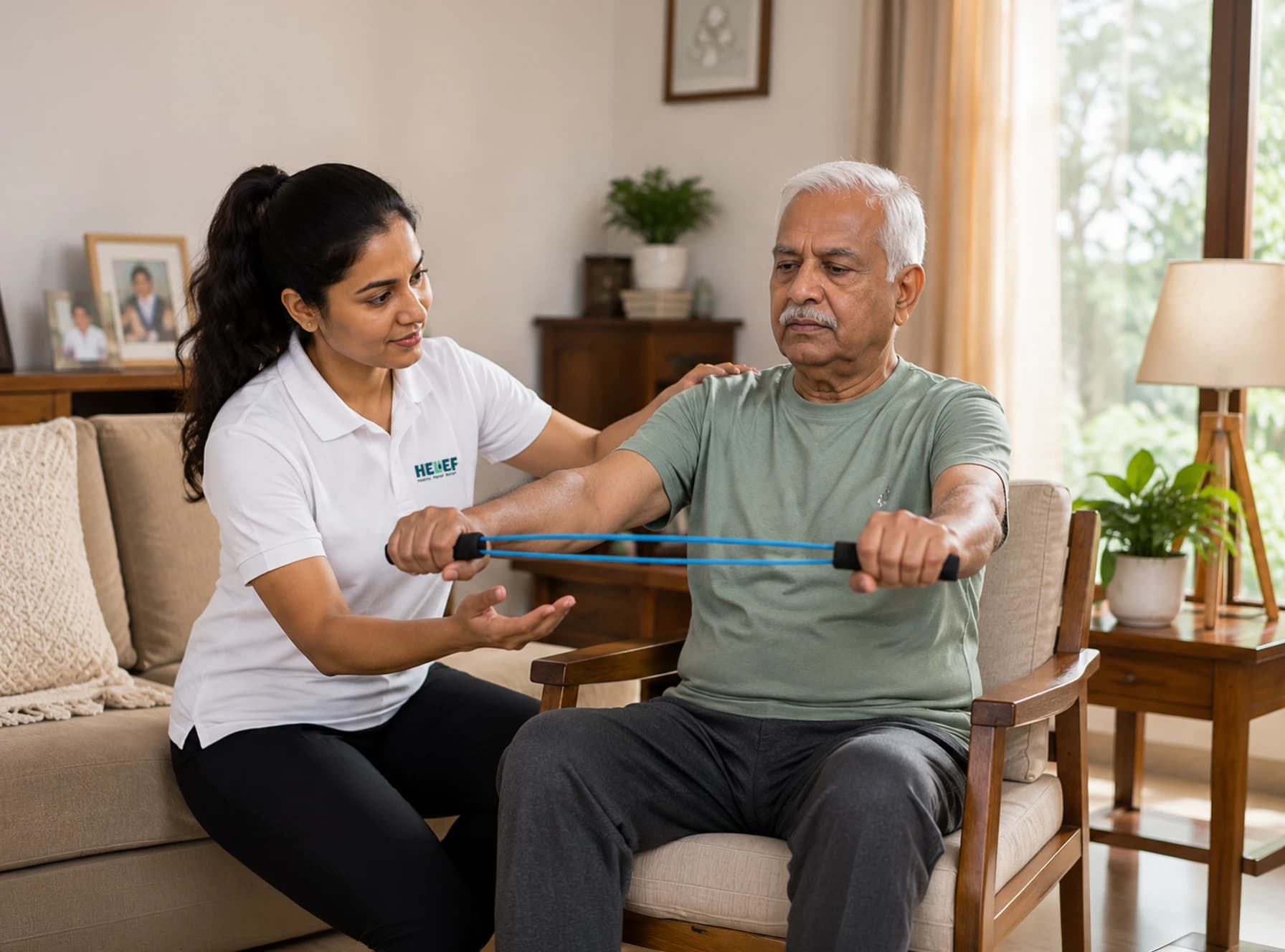
The core of the work is progressive resistance exercise — the treatment with the strongest evidence for rebuilding muscle in older adults — combined with functional strength, balance, and endurance training that translate directly into everyday tasks. We keep sessions achievable and encouraging, and coach the family on simple activities and nutrition to support progress between visits.
Treatment techniques
Evidence-based methods we use
Progressive resistance training
Safe, gradually increasing strengthening — the most effective way to rebuild the muscle lost to age and inactivity.
Functional strength training
Exercises built around real tasks — standing up, climbing stairs, carrying — so gains show up in daily life.
Balance & mobility work
Balance and walking practice to keep movement safe and reduce the falls that frailty makes more likely.
Endurance & stamina building
Gentle, graded activity to rebuild the stamina for everyday life and reduce fatigue.
Activity pacing
Structuring effort and rest so progress is steady and sustainable without over-tiring.
Family & nutrition coaching
Guiding the family on simple daily movement and the protein and nutrition that support rebuilding strength.
Recovery timeline
What progress typically looks like
Every recovery is individual — this is a general guide, not a guarantee. Your physiotherapist sets realistic milestones after the first assessment.
- 1Getting started
Assess & set gentle goals
A careful assessment of strength, stamina, and balance, and small, achievable goals to build early momentum.
- 2Weeks 1–6
Rebuild strength
Progressive strengthening that steadily restores muscle, making everyday tasks feel easier.
- 3Weeks 6–12
Restore stamina & mobility
Building endurance and confident movement so walking, stairs, and activity outside become manageable again.
- 4Ongoing
Maintain & stay independent
A sustainable routine to hold on to strength and stamina and keep decline from returning.
Why at home
The advantage of treating frailty & weakness at home
Exercises are built around your parent's real home and daily tasks
No exhausting travel for someone who already tires easily
Sessions are paced to their energy on the day, in comfortable surroundings
Family are coached on movement and nutrition to support progress daily
Certified physiotherapists, clinical standards, delivered at home
Every frailty & weakness treatment plan is delivered by a qualified, vetted physiotherapist following proper assessment and safety protocols — built around your goals and paced to your recovery.
Book Now
Start frailty & weakness treatment at home
Share your details and we'll call you back to arrange a home visit across Bangalore. A certified physiotherapist assesses the cause before any treatment begins.
Locations we serve
Frailty & Weakness physiotherapy across Bangalore
Our certified physiotherapists visit homes right across the city. Pick your area, or message us to check availability near you.
Not on the list? WhatsApp us — we cover much of Bangalore.
FAQ
Frailty & Weakness — your questions
Related conditions
You may also be looking for
Balance Problems & Falls
Rebuilding steadiness, strength, and confidence so a fall doesn't take away independence.
Learn MoreWalking Difficulty
Retraining how your parent walks — steadier steps, longer distances, and less reliance on furniture.
Learn MoreOsteoporosis
Building strength and steadiness to protect fragile bones and prevent the falls that cause fractures.
Learn MorePost-Hospitalisation Recovery
Rebuilding the strength and mobility lost during a hospital stay, safely at home.
Learn MoreFracture Recovery
Rebuilding movement and strength after a fracture or fixation surgery — at home in Bangalore.
Learn MoreStart your recovery journey this week
Book a home visit and let a certified physiotherapist come to you — no travel, no waiting rooms.