Osteoporosis Physiotherapy at Home in Bangalore
Osteoporosis makes bones fragile — but the right exercise strengthens them, and better balance stops the falls that cause fractures. Our certified physiotherapists bring safe, evidence-based osteoporosis care to your home in Bangalore.
- 5-Star Rated
- 100+ Happy Patients
- Certified Physiotherapists
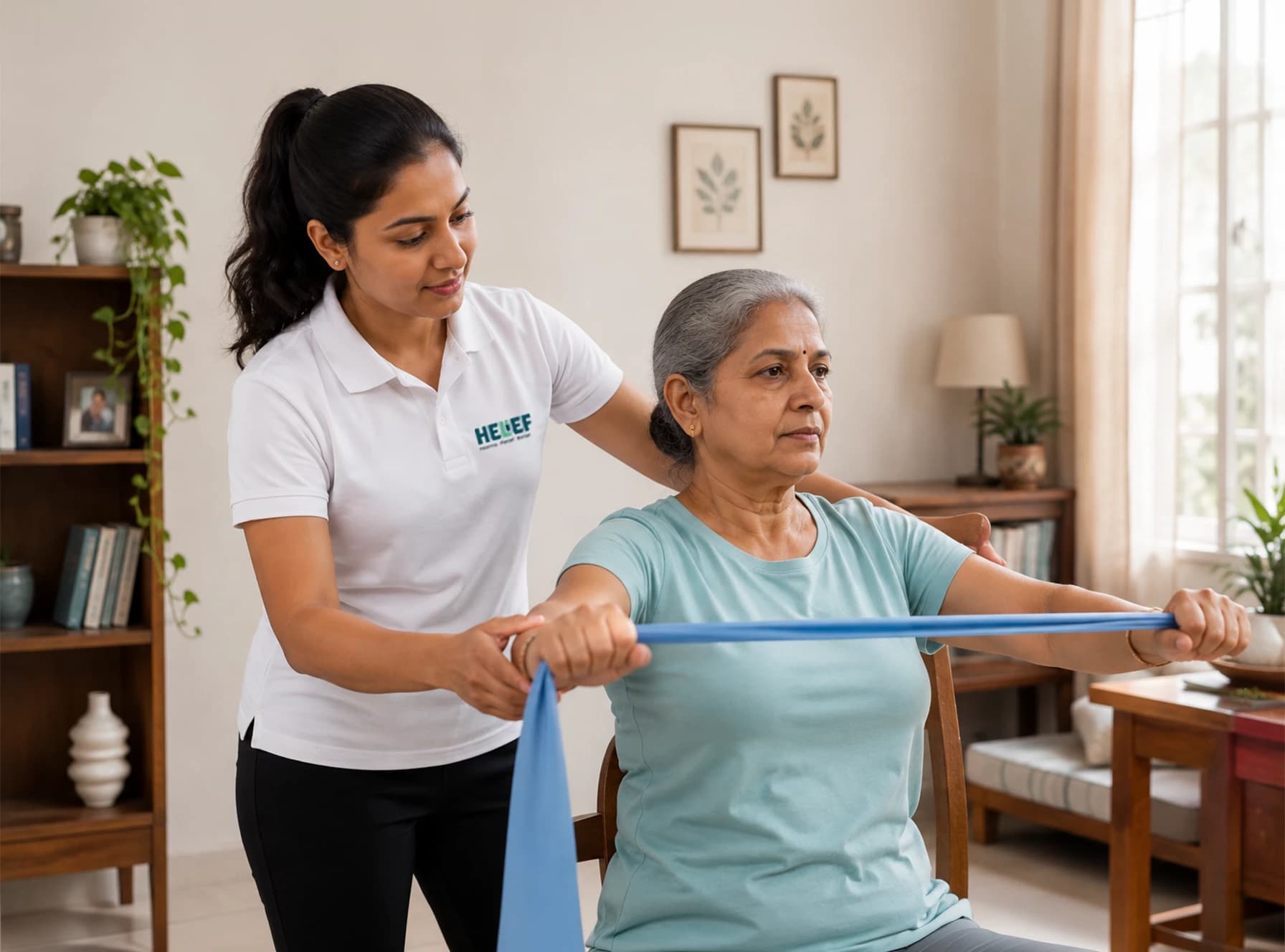
Certified Physiotherapists
Verified & background-checked
Quick answer
Physiotherapy for osteoporosis uses safe weight-bearing and resistance exercise to help maintain bone strength, plus balance and posture training to prevent the falls that cause most fractures. It can't fully reverse bone loss, but it measurably reduces fracture risk and keeps older adults strong, upright, and confident.
Understanding it
What is osteoporosis?
Osteoporosis is a condition in which bones gradually lose density and become fragile, so they break far more easily — sometimes from a minor fall or even everyday movements. It's common with age, especially in women after menopause, and it's often silent until a fracture happens, most often at the hip, wrist, or spine.
Physiotherapy is one of the most valuable non-medication treatments for osteoporosis. It doesn't replace the bone-protecting medication and calcium or vitamin D your doctor may prescribe, but strong evidence shows that the right exercise helps maintain bone strength, dramatically improves balance and posture, and reduces the falls that cause the great majority of fractures.
Common symptoms
- Often no symptoms at all until a bone breaks (a 'silent' disease)
- A gradual stoop or rounding of the upper back
- Loss of height over time
- Back pain, sometimes from a small vertebral fracture
- Bones that break more easily than expected, from minor knocks or falls
Common causes
- Natural loss of bone density with age
- The drop in oestrogen after menopause in women
- Low calcium or vitamin D over many years
- A sedentary lifestyle with little weight-bearing activity
- Long-term use of certain medications, such as steroids
- Smoking, heavy alcohol use, and a family history of osteoporosis
Risk factors
What raises the likelihood
Don't wait it out
When to see a physiotherapist
If any of these sound familiar, an assessment is worth booking. Treating it early usually means a faster, fuller recovery.
After a diagnosis of osteoporosis or osteopenia, to start safe exercise
If posture is changing or the upper back is becoming rounded
If balance is declining or there have been any falls
After a fracture, to rebuild strength safely and prevent the next one
If fear of falling is making everyday movement harder
Seek medical care first
These signs need a doctor or emergency care — not physiotherapy. Please get urgent medical attention if you notice:
- Sudden, severe back pain after a minor movement or fall (possible spinal fracture — seek medical review)
- A noticeable, rapid loss of height or worsening stoop
- Severe pain or inability to bear weight after a fall (possible fracture — seek medical care)
- New numbness, tingling, or weakness in the legs (needs urgent medical assessment)
Our approach
How Helief treats osteoporosis at home
Every plan starts with an assessment of strength, posture, balance, and fall risk, along with a look at the home for the hazards that cause most falls. Because the wrong movements — high-impact activity or repeated bending forward — can actually risk a fracture in fragile bones, we're careful to teach what's safe and what to avoid.
The work centres on the exercise that evidence supports for osteoporosis: weight-bearing and resistance exercise to help maintain bone and build the muscle that protects it, posture training to keep the spine upright and reduce strain, and balance work to prevent falls. We pace everything to the person and coach the family on safe daily movement.
Treatment techniques
Evidence-based methods we use
Weight-bearing & resistance exercise
Safe, graded strengthening that helps maintain bone density and builds the muscle that supports and protects fragile bones.
Balance & fall prevention
Targeted balance training and home-hazard advice to prevent the falls that cause the great majority of osteoporotic fractures.
Posture training
Exercises to counter the stoop of osteoporosis, keeping the spine upright and reducing strain on fragile vertebrae.
Safe-movement education
Teaching which everyday movements protect the spine and which to avoid, so daily life doesn't put fragile bones at risk.
Core & back strengthening
Gentle strengthening of the trunk muscles that support the spine and improve stability and confidence.
Confidence & activity building
Rebuilding the confidence to stay active safely, breaking the fear-of-falling cycle that weakens bone further.
Recovery timeline
What progress typically looks like
Every recovery is individual — this is a general guide, not a guarantee. Your physiotherapist sets realistic milestones after the first assessment.
- 1Getting started
Assess & learn what's safe
A full assessment of strength, posture, balance, and fall risk, plus clear guidance on safe and unsafe movements.
- 2Weeks 1–6
Build strength & balance
A steady, weight-bearing and balance programme that builds supporting muscle and improves steadiness on the feet.
- 3Ongoing
Maintain & protect
Regular exercise to help maintain bone strength, hold good posture, and keep fall risk low over the long term.
- 4As confidence grows
Stay active & independent
Progressing activity safely so an active life continues, with the fear of fracture no longer holding movement back.
Why at home
The advantage of treating osteoporosis at home
The physiotherapist assesses and fixes the actual fall hazards in your own home
No risky, tiring travel to a clinic for someone with fragile bones
Exercises are matched to your real living space and daily routine
Family are coached to support safe movement and activity every day
Certified physiotherapists, clinical standards, delivered at home
Every osteoporosis treatment plan is delivered by a qualified, vetted physiotherapist following proper assessment and safety protocols — built around your goals and paced to your recovery.
Book Now
Start osteoporosis treatment at home
Share your details and we'll call you back to arrange a home visit across Bangalore. A certified physiotherapist assesses the cause before any treatment begins.
Locations we serve
Osteoporosis physiotherapy across Bangalore
Our certified physiotherapists visit homes right across the city. Pick your area, or message us to check availability near you.
Not on the list? WhatsApp us — we cover much of Bangalore.
FAQ
Osteoporosis — your questions
Related conditions
You may also be looking for
Balance Problems & Falls
Rebuilding steadiness, strength, and confidence so a fall doesn't take away independence.
Learn MoreFrailty & Weakness
Rebuilding strength and stamina to reverse age-related decline and protect independence.
Learn MoreFracture Recovery
Rebuilding movement and strength after a fracture or fixation surgery — at home in Bangalore.
Learn MoreArthritis
Manage joint pain and stiffness and stay active — treated at home.
Learn MoreStart your recovery journey this week
Book a home visit and let a certified physiotherapist come to you — no travel, no waiting rooms.