Hip Replacement Recovery at Home in Bangalore
After a hip replacement, the right movements matter as much as avoiding the wrong ones. Our certified physiotherapists bring safe, precaution-aware rehab to your home in Bangalore — rebuilding strength, restoring a smooth walk, and getting you back to independent daily life.
- 5-Star Rated
- 100+ Happy Patients
- Certified Physiotherapists
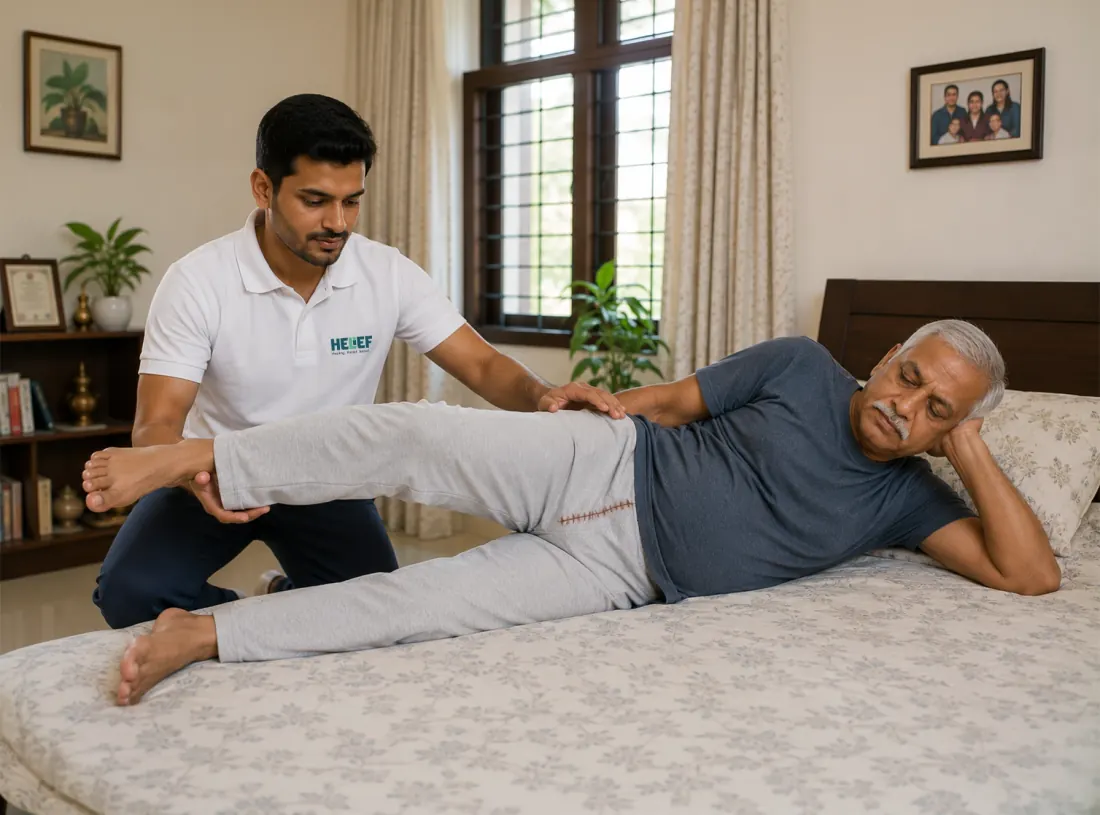
Certified Physiotherapists
Verified & background-checked
Quick answer
Hip replacement recovery physiotherapy rebuilds the strength, movement, and walking pattern needed after a total hip replacement (THR), while respecting the hip precautions that protect the new joint. Guided rehab begins soon after discharge and progresses over roughly three months — and home-based care makes it both safer and easier to keep up.
Understanding it
What is hip replacement?
A total hip replacement (THR) replaces the worn ball-and-socket hip joint with a smooth artificial implant. It's one of the most successful operations in medicine — but the strength and confident walking that make it worthwhile come from the rehabilitation that follows.
Physiotherapy after a hip replacement rebuilds the muscles around the hip (especially the glutes), restores a smooth walking pattern, and retrains everyday movements — all while respecting the 'hip precautions' that protect the joint from dislocation in the early weeks. Done well, it turns a successful operation into a genuinely independent recovery.
What recovery involves
- Weakness in the hip and buttock (gluteal) muscles
- A limp or uneven, cautious walking pattern
- Stiffness and reduced movement in the new hip
- Difficulty with stairs and standing up from low chairs
- Uncertainty about which movements are safe
- Reduced confidence and reliance on a walker or stick
Why a hip replacement is done
- Severe hip osteoarthritis (the most common reason)
- Rheumatoid or other inflammatory arthritis
- A hip fracture (often in older adults after a fall)
- Avascular necrosis (loss of blood supply to the hip bone)
- Post-traumatic arthritis after an earlier injury
- Hip dysplasia or a worn-out previous hip surgery
Your recovery
What affects your recovery
Getting started
When to start rehabilitation
If any of these sound familiar, an assessment is worth booking. Treating it early usually means a faster, fuller recovery.
Soon after discharge — early, guided rehab improves the outcome
If you're unsure which movements are safe for your new hip
If your walking is staying uneven or reliant on a walker
If strength and confidence aren't improving week to week
If you were discharged without a clear rehabilitation plan
Seek medical care first
These signs need a doctor or emergency care — not physiotherapy. Please get urgent medical attention if you notice:
- Sudden severe hip pain with the leg looking shortened or rotated (possible dislocation — seek urgent care)
- Fever, or a wound that is hot, red, opening, or leaking (possible infection)
- Calf pain, swelling, or redness (possible blood clot / DVT)
- Chest pain or sudden breathlessness (seek emergency care immediately)
Our approach
How Helief treats hip replacement at home
Every plan starts by reviewing your procedure and your surgeon's precautions, then assessing your movement, strength, and walking. Hip precautions — the positions to avoid so the new joint doesn't dislocate early on — are built into everything we do, so you can rebuild strength with total confidence that you're not putting the hip at risk.
From there we combine gluteal and hip strengthening, gait retraining, and practice of the everyday movements that matter — stairs, chairs, dressing, getting in and out of bed. We progress you steadily off walking aids as you're ready, and coach your family on safe support between visits.
Treatment techniques
Evidence-based methods we use
Precaution-safe rehabilitation
Every exercise respects your surgeon's hip precautions, so you rebuild strength without risking the joint.
Gluteal & hip strengthening
Progressive strengthening of the buttock and hip muscles that stabilise the new joint and power a smooth walk.
Gait (walking) retraining
Rebuilding an even, confident walking pattern and safely reducing reliance on a walker or stick.
Functional movement training
Practising stairs, sitting to standing, dressing, and getting in and out of bed and the car — safely.
Balance & fall prevention
Steadiness work to keep you safe on your feet, especially important for older adults after surgery.
Home safety & progression
Setting up your home to support recovery and progressing the plan against clear milestones.
Recovery timeline
What progress typically looks like
Every recovery is individual — this is a general guide, not a guarantee. Your physiotherapist sets realistic milestones after the first assessment.
- 1Weeks 0–2
Protect & mobilise safely
Early guided movement within your hip precautions, activating the muscles and starting safe walking.
- 2Weeks 2–6
Build strength & walking
Progressive gluteal strengthening and gait work steadily improve your walking and reduce reliance on aids.
- 3Weeks 6–12
Restore independence
Confident stairs, chairs, and daily tasks — most people move well beyond walking aids in this phase.
- 43 months+
Return to full activity
Rebuilding the activities you value and maintaining hip strength for the long term.
Why at home
The advantage of treating hip replacement at home
No risky travel on a new hip during the precaution period
Your physiotherapist makes your actual chairs, bed, bathroom, and stairs safe
One-on-one attention every session, driving consistent progress
Family coached on safe transfers and support between visits
Certified physiotherapists, clinical standards, delivered at home
Every hip replacement treatment plan is delivered by a qualified, vetted physiotherapist following proper assessment and safety protocols — built around your goals and paced to your recovery.
Book Now
Start hip replacement treatment at home
Share your details and we'll call you back to arrange a home visit across Bangalore. A certified physiotherapist assesses the cause before any treatment begins.
Locations we serve
Hip Replacement physiotherapy across Bangalore
Our certified physiotherapists visit homes right across the city. Pick your area, or message us to check availability near you.
Not on the list? WhatsApp us — we cover much of Bangalore.
FAQ
Hip Replacement — your questions
Related conditions
You may also be looking for
Knee Replacement
Structured, safe rehabilitation after a total knee replacement — at home in Bangalore.
Learn MoreFracture Recovery
Rebuilding movement and strength after a fracture or fixation surgery — at home in Bangalore.
Learn MoreSpine Surgery
Careful, guided rehabilitation after back or neck surgery — rebuilding movement and confidence at home.
Learn MoreHip Pain
Ease hip pain and stiffness and move with ease again — treated at home.
Learn MoreStart your recovery journey this week
Book a home visit and let a certified physiotherapist come to you — no travel, no waiting rooms.