Spine Surgery Recovery at Home in Bangalore
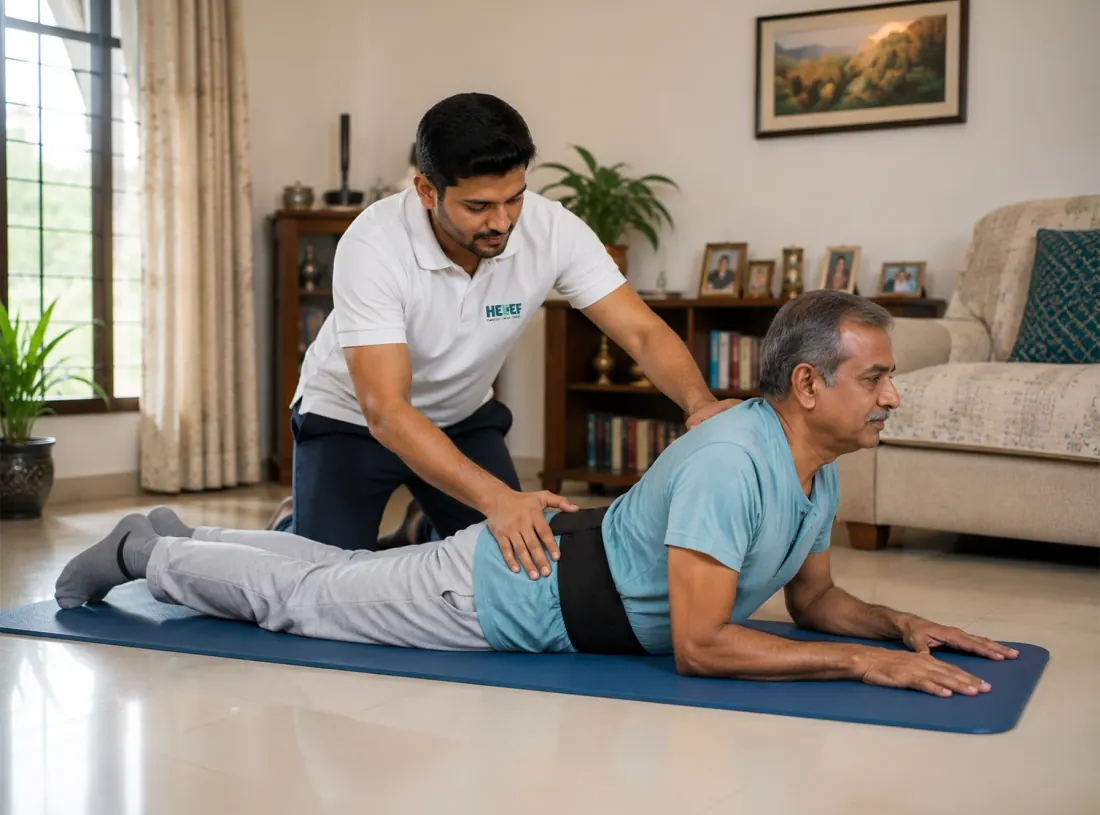
After back or neck surgery, careful, well-timed rehabilitation is what turns a successful operation into a real recovery. Our certified physiotherapists bring safe, surgeon-guided rehab to your home in Bangalore — rebuilding movement, core strength, and the confidence to trust your back again.
- 5-Star Rated
- 100+ Happy Patients
- Certified Physiotherapists
Certified Physiotherapists
Verified & background-checked
Quick answer
Spine surgery recovery physiotherapy rebuilds safe movement, core and postural strength, and confidence after procedures such as discectomy, laminectomy, or spinal fusion. Rehab is carefully staged and always guided by the surgeon's protocol — and delivering it at home means the plan fits your real daily movements and recovers gradually without strain.
Understanding it
What is spine surgery?
Spine surgery covers several procedures — a discectomy (removing disc pressing on a nerve), a laminectomy (relieving pressure on the spinal canal), or a spinal fusion (joining vertebrae for stability), among others. Each is done to relieve a specific problem, and each has its own healing timeline that rehabilitation has to respect.
Physiotherapy after spine surgery rebuilds safe, comfortable movement, restores the deep core and postural muscles that support the spine, and — just as importantly — rebuilds the confidence to move after months or years of guarding a painful back. The pace is careful and always led by your surgeon's protocol, because the right movement at the wrong time can set recovery back.
What recovery involves
- Stiffness and cautious, guarded movement of the back or neck
- Weakness in the core and postural muscles after surgery
- Fear of bending, lifting, or moving 'the wrong way'
- Reduced walking tolerance and general deconditioning
- Residual nerve symptoms settling at their own pace
- Uncertainty about which activities are now safe
Why spine surgery is done
- A herniated (slipped) disc pressing on a nerve — treated by discectomy
- Spinal canal narrowing (stenosis) — treated by laminectomy
- Spinal instability or slippage — treated by fusion
- Persistent sciatica or nerve compression not settling with conservative care
- Significant, progressive nerve-related weakness or numbness
- Degenerative changes or injury affecting the spine
Your recovery
What affects your recovery
Getting started
When to start rehabilitation
If any of these sound familiar, an assessment is worth booking. Treating it early usually means a faster, fuller recovery.
Once your surgeon clears rehabilitation to begin
If fear of movement is holding your recovery back
If your walking tolerance and strength aren't improving
Before returning to work, lifting, or demanding activity
If you were discharged without a clear rehab plan
Seek medical care first
These signs need a doctor or emergency care — not physiotherapy. Please get urgent medical attention if you notice:
- Loss of bladder or bowel control, or numbness around the groin/saddle area (seek emergency care)
- New or worsening weakness, numbness, or foot drop in a leg or arm
- Fever, or a wound that is hot, red, opening, or leaking (possible infection)
- Sudden, severe, unrelenting pain, or calf pain/swelling (possible clot)
Our approach
How Helief treats spine surgery at home
Spine surgery rehab depends heavily on the procedure and your surgeon's protocol, so the assessment comes first. We confirm which surgery you had, what stage of healing you're in, and any restrictions — for example on bending, twisting, or lifting after a fusion — then build the plan strictly within those limits while still restoring movement and strength.
From there we combine graded movement, deep-core and postural strengthening, walking-tolerance work, and practical guidance on posture, sitting, and safe lifting. A large part of recovery is confidence — relearning that movement is safe — so we progress you steadily and coach you (and your family) on the daily habits that protect the spine long-term.
Treatment techniques
Evidence-based methods we use
Surgeon-guided, staged progression
Care matched to your specific procedure and your surgeon's restrictions on bending, twisting, and lifting.
Graded movement & mobility
Carefully restoring comfortable movement in the back or neck without overloading the healing tissues.
Deep-core & postural strengthening
Rebuilding the muscles that support and protect the spine — the foundation of a durable recovery.
Walking & conditioning
Steadily rebuilding walking tolerance and general fitness, which strongly supports spinal recovery.
Posture, sitting & safe lifting
Practical retraining of daily habits — sitting, bending, and lifting — to protect the spine going forward.
Confidence & graded return
Relearning that movement is safe, and a structured path back to work and daily activity.
Recovery timeline
What progress typically looks like
Every recovery is individual — this is a general guide, not a guarantee. Your physiotherapist sets realistic milestones after the first assessment.
- 1Early phase
Protect & move gently
Once cleared, gentle guided movement and walking within your surgeon's restrictions, protecting the repair.
- 2Mid phase
Rebuild strength
Progressive deep-core and postural strengthening as healing allows, alongside growing walking tolerance.
- 3Later phase
Restore function & confidence
Returning to daily tasks, lifting, and activity with correct technique and renewed confidence.
- 4Ongoing
Protect the spine long-term
A sustainable routine and good movement habits to keep the spine strong and lower the risk of future problems.
Why at home
The advantage of treating spine surgery at home
No uncomfortable travel with a recently operated spine
Your physiotherapist sets up the actual chair, desk, and bed that affect your recovery
One-on-one attention, paced carefully to your surgeon's protocol
Confidence rebuilt in the environment where you actually move and live
Certified physiotherapists, clinical standards, delivered at home
Every spine surgery treatment plan is delivered by a qualified, vetted physiotherapist following proper assessment and safety protocols — built around your goals and paced to your recovery.
Book Now
Start spine surgery treatment at home
Share your details and we'll call you back to arrange a home visit across Bangalore. A certified physiotherapist assesses the cause before any treatment begins.
Locations we serve
Spine Surgery physiotherapy across Bangalore
Our certified physiotherapists visit homes right across the city. Pick your area, or message us to check availability near you.
Not on the list? WhatsApp us — we cover much of Bangalore.
FAQ
Spine Surgery — your questions
Related conditions
You may also be looking for
Fracture Recovery
Rebuilding movement and strength after a fracture or fixation surgery — at home in Bangalore.
Learn MoreBack Pain
Lasting relief from lower and upper back pain — treated at the root, at home.
Learn MoreSciatica
Calm nerve pain running from the back into the leg — treated at home.
Learn MoreHip Replacement
Safe, guided rehabilitation after a hip replacement — restoring walking and independence at home.
Learn MoreStart your recovery journey this week
Book a home visit and let a certified physiotherapist come to you — no travel, no waiting rooms.