Hip Pain Physiotherapy at Home in Bangalore
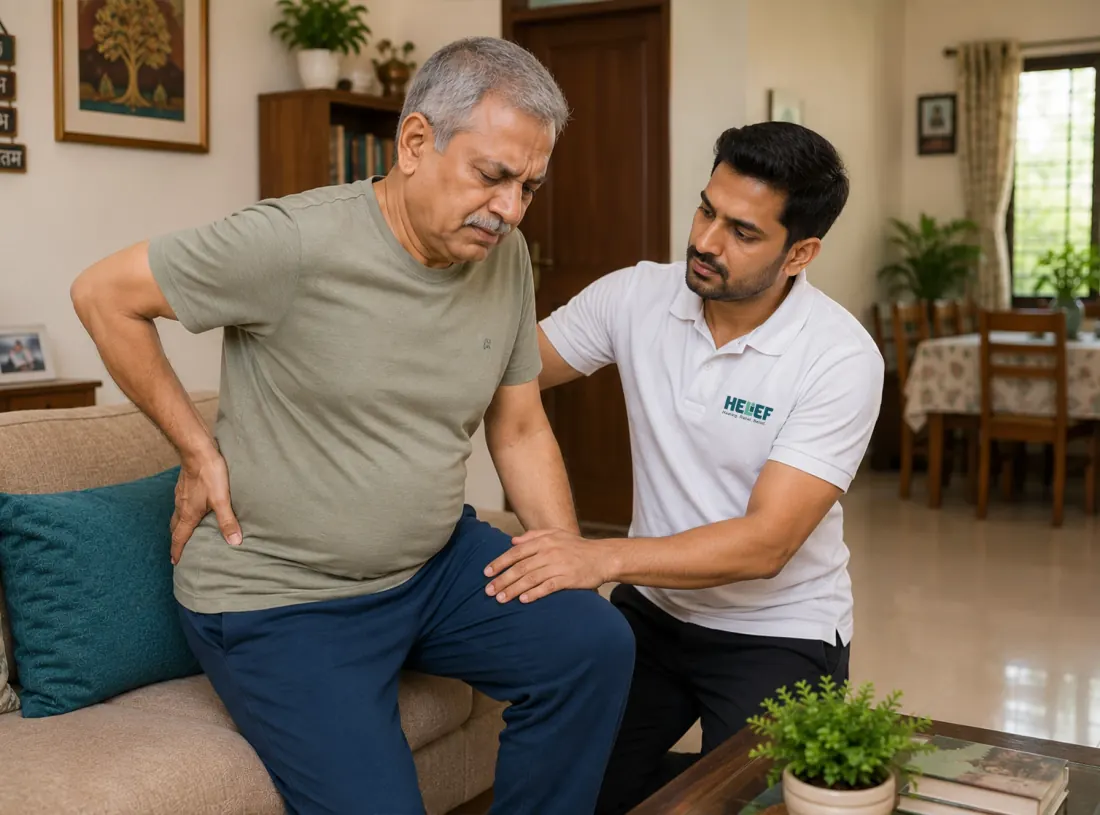
Hip pain can make walking, stairs, and even sleeping uncomfortable. Our certified physiotherapists come to your home in Bangalore, identify exactly what's causing the pain, and treat it with hands-on care and a strengthening plan that restores comfortable, confident movement.
- 5-Star Rated
- 100+ Happy Patients
- Certified Physiotherapists
Certified Physiotherapists
Verified & background-checked
Quick answer
Hip pain physiotherapy treats the cause of the pain — commonly osteoarthritis, tendon or bursa irritation, or muscle weakness — through hands-on therapy and progressive strengthening of the muscles that support and stabilise the hip. Most people improve within 6–8 weeks, and structured physiotherapy often reduces pain enough to delay or avoid surgery.
Understanding it
What is hip pain?
The hip is a large, weight-bearing ball-and-socket joint, and pain around it can come from several sources: the joint itself (as in osteoarthritis), the tendons and bursa on the outer hip (a very common cause of side-of-hip pain), or the surrounding muscles. Pain may be felt in the groin, the outer hip, or the buttock, and often affects walking, stairs, and sleep.
Because the hip relies heavily on the strength and control of the muscles around it, most hip pain responds well to physiotherapy. The goal is to settle the irritated structure, rebuild the supporting strength — especially in the glutes — and restore smooth, confident movement, which for many people means avoiding or delaying surgery.
Common symptoms
- Pain in the groin, outer hip, or buttock
- Pain and stiffness with walking, stairs, or standing up from a chair
- Tenderness on the outer hip, especially lying on that side at night
- Stiffness after sitting or first thing in the morning
- A reduced, restricted range of movement in the hip
- A limp or a feeling that the hip is weak or unstable
Common causes
- Hip osteoarthritis and age-related joint wear
- Gluteal tendon irritation or bursitis on the outer hip
- Weakness in the gluteal and hip-stabilising muscles
- Overuse from walking, running, or a sudden increase in activity
- Previous hip injury or altered movement from back or knee problems
- Being overweight, which increases load through the joint
Risk factors
What raises the likelihood
Don't wait it out
When to see a physiotherapist
If any of these sound familiar, an assessment is worth booking. Treating it early usually means a faster, fuller recovery.
Hip pain lasting more than a week or two without clear improvement
Pain that recurs with walking, stairs, or activity
Outer-hip pain that disturbs your sleep
Stiffness or reduced movement affecting daily activities
A limp or a sense that the hip is weak or giving way
Seek medical care first
These signs need a doctor or emergency care — not physiotherapy. Please get urgent medical attention if you notice:
- Inability to bear weight on the leg after a fall or injury (possible fracture)
- Sudden, severe hip pain with a leg that looks shortened or rotated
- Fever with a hot, swollen, intensely painful hip
- Significant unexplained weight loss with the hip pain
Our approach
How Helief treats hip pain at home
Every plan starts with a proper assessment. Your physiotherapist works out where the pain is really coming from — the joint, the outer-hip tendons, or the muscles — checks your movement, strength, and how you walk, and screens for anything that needs a medical opinion. They also look at the back and knee, since problems there can drive hip pain.
From there, we combine hands-on therapy to ease pain and stiffness with a progressive strengthening programme focused on the glutes and hip stabilisers that support the joint. We also address the everyday things — walking, stairs, sitting, and sleep positions — so the hip is loaded well and the pain has fewer reasons to persist.
Treatment techniques
Evidence-based methods we use
Progressive gluteal & hip strengthening
The cornerstone of hip recovery — building the muscles that stabilise, support, and offload the joint.
Manual therapy & joint mobilisation
Hands-on techniques to ease stiffness and improve comfortable movement in and around the hip.
Soft-tissue & tendon-load management
For outer-hip tendon and bursa pain, managing load and irritation while rebuilding tendon capacity.
Gait & functional retraining
Correcting how you walk, climb stairs, and rise from chairs to protect and offload the hip.
Balance & stability work
Keeping you steady and confident on your feet, which matters as hip pain affects walking.
Activity, sleep & load guidance
Practical advice on pacing, sleep positions, and reducing load through the joint to ease symptoms.
Recovery timeline
What progress typically looks like
Every recovery is individual — this is a general guide, not a guarantee. Your physiotherapist sets realistic milestones after the first assessment.
- 1Weeks 1–2
Calm pain & stiffness
First we reduce the most troublesome pain and restore gentle, comfortable movement in the hip.
- 2Weeks 2–4
Restore movement & activate muscles
We improve range of motion and begin waking up and strengthening the glutes and hip stabilisers.
- 3Weeks 4–8
Build supporting strength
Progressive strengthening gives the hip the support it needs for walking, stairs, and daily life.
- 4Beyond 8 weeks
Return to activity & maintain
We progress you back to the activities you value and set up a routine to keep the hip strong and comfortable.
Why at home
The advantage of treating hip pain at home
No painful walk or commute to a clinic when your hip already hurts
Your physiotherapist sees how you manage stairs, chairs, and sleep at home, and adjusts them
One-on-one attention every session, which improves consistency and results
Exercises tailored to the space and support you have at home
Certified physiotherapists, clinical standards, delivered at home
Every hip pain treatment plan is delivered by a qualified, vetted physiotherapist following proper assessment and safety protocols — built around your goals and paced to your recovery.
Book Now
Start hip pain treatment at home
Share your details and we'll call you back to arrange a home visit across Bangalore. A certified physiotherapist assesses the cause before any treatment begins.
Locations we serve
Hip Pain physiotherapy across Bangalore
Our certified physiotherapists visit homes right across the city. Pick your area, or message us to check availability near you.
Not on the list? WhatsApp us — we cover much of Bangalore.
FAQ
Hip Pain — your questions
Related conditions
You may also be looking for
Knee Pain
Reduce knee pain and stiffness and move freely again — treated at home.
Learn MoreBack Pain
Lasting relief from lower and upper back pain — treated at the root, at home.
Learn MoreArthritis
Manage joint pain and stiffness and stay active — treated at home.
Learn MoreSciatica
Calm nerve pain running from the back into the leg — treated at home.
Learn MoreStart your recovery journey this week
Book a home visit and let a certified physiotherapist come to you — no travel, no waiting rooms.