Plantar Fasciitis Physiotherapy at Home in Bangalore
That sharp heel pain with your first steps in the morning is the hallmark of plantar fasciitis — and it can linger for months. Our certified physiotherapists come to your home in Bangalore with a targeted plan of stretching, strengthening, and load management to settle the pain and get you moving comfortably.
- 5-Star Rated
- 100+ Happy Patients
- Certified Physiotherapists
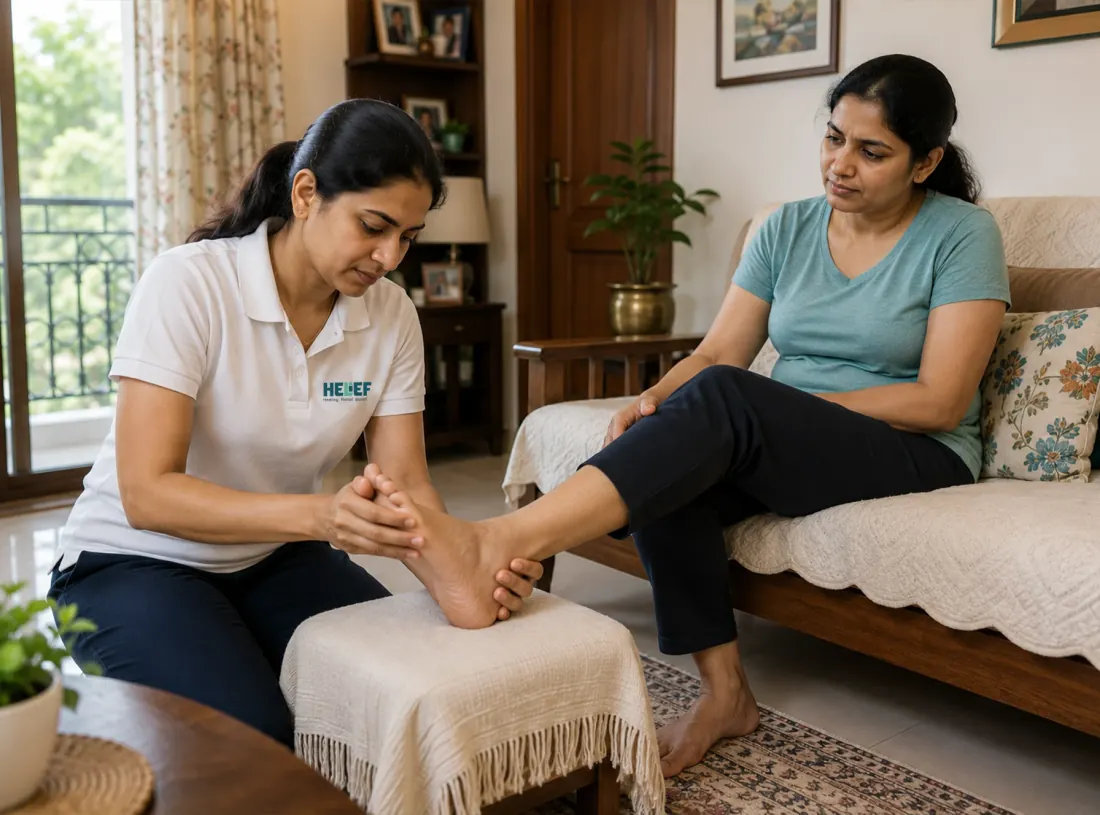
Certified Physiotherapists
Verified & background-checked
Quick answer
Plantar fasciitis physiotherapy relieves heel and arch pain — caused by overload of the plantar fascia along the sole of the foot — through targeted stretching, calf and foot strengthening, and load management. It's the most effective conservative treatment, and while recovery takes patience over several weeks to months, most people settle well without injections or surgery.
Understanding it
What is plantar fasciitis?
Plantar fasciitis is pain from overload of the plantar fascia — the thick band of tissue that runs along the sole of your foot from the heel to the toes and supports your arch. The classic sign is sharp heel pain with your first steps in the morning or after sitting, which eases a little as you warm up but returns after being on your feet.
It's usually an overload and tissue-tolerance problem rather than simple inflammation, which is why it can be stubborn. The most effective treatment is a targeted programme of stretching, foot and calf strengthening, and managing the load through the foot — and physiotherapy is how that's assessed, delivered, and progressed.
Common symptoms
- Sharp heel pain with the first steps in the morning or after rest
- Pain under the heel or along the arch of the foot
- Pain that eases with initial movement but returns after long standing or walking
- Tenderness when pressing the inside of the heel
- Discomfort that worsens after (rather than during) exercise
- Tightness in the calf and the sole of the foot
Common causes
- Overload of the plantar fascia from standing, walking, or running
- A sudden increase in activity, steps, or a new exercise
- Tight calf muscles and reduced ankle flexibility
- Unsupportive footwear or long periods barefoot on hard floors
- Being overweight, which increases load through the foot
- Weak foot and calf muscles that can't support the arch
Risk factors
What raises the likelihood
Don't wait it out
When to see a physiotherapist
If any of these sound familiar, an assessment is worth booking. Treating it early usually means a faster, fuller recovery.
Heel or arch pain that has lasted more than a week or two
Sharp first-step pain in the morning that keeps recurring
Foot pain that limits standing, walking, or exercise
Pain that isn't settling with rest and simple footwear changes
Heel pain that keeps returning whenever you increase activity
Seek medical care first
These signs need a doctor or emergency care — not physiotherapy. Please get urgent medical attention if you notice:
- Heel pain following a specific injury or a fall from height (to rule out a fracture)
- Numbness, tingling, or burning spreading through the foot (possible nerve involvement)
- A hot, red, swollen foot with fever
- Severe, constant pain that is present at rest and through the night
Our approach
How Helief treats plantar fasciitis at home
Every plan starts with a proper assessment. Your physiotherapist confirms the diagnosis, checks your calf flexibility, foot and ankle strength, and how you walk, and reviews your footwear and activity — because plantar fasciitis is usually driven by a combination of tight calves, weak foot muscles, and too much load too soon.
From there, we combine targeted stretching and progressive foot and calf strengthening with practical load management — footwear, activity pacing, and where useful, supportive taping or insoles. We progress the programme as your tolerance builds, so you can return to standing, walking, and exercise without the pain returning.
Treatment techniques
Evidence-based methods we use
Calf & plantar fascia stretching
Targeted stretches that reduce the tension overloading the heel and improve ankle flexibility.
Progressive foot & calf strengthening
Evidence-based loading exercises that build the strength to support the arch and tolerate standing and walking.
Manual therapy & soft-tissue release
Hands-on techniques to ease tightness in the calf and sole and improve comfort.
Load management & activity pacing
Adjusting your standing, walking, and exercise load so the tissue can recover while you stay active.
Taping, footwear & insole advice
Practical support — taping, the right shoes, and whether insoles could help offload the heel.
Graded return to activity
A structured path back to full walking, standing, and running without re-triggering the pain.
Recovery timeline
What progress typically looks like
Every recovery is individual — this is a general guide, not a guarantee. Your physiotherapist sets realistic milestones after the first assessment.
- 1Weeks 1–2
Settle pain & offload the heel
We reduce the sharp first-step pain, start gentle stretching, and manage the load through the foot.
- 2Weeks 2–6
Stretch & begin strengthening
Consistent stretching plus progressive foot and calf strengthening start rebuilding tolerance.
- 3Weeks 6–12
Build capacity
We advance the loading so the foot comfortably tolerates longer standing, walking, and activity.
- 4Beyond 12 weeks
Return to full activity
A graded return to running and long days on your feet, with a maintenance routine to prevent recurrence.
Why at home
The advantage of treating plantar fasciitis at home
No painful walk into a clinic when the first steps of the day already hurt
Your physiotherapist reviews your actual footwear and home flooring
One-on-one coaching to get the stretching and loading exercises right
Exercises tailored to your daily standing and walking routine
Certified physiotherapists, clinical standards, delivered at home
Every plantar fasciitis treatment plan is delivered by a qualified, vetted physiotherapist following proper assessment and safety protocols — built around your goals and paced to your recovery.
Book Now
Start plantar fasciitis treatment at home
Share your details and we'll call you back to arrange a home visit across Bangalore. A certified physiotherapist assesses the cause before any treatment begins.
Locations we serve
Plantar Fasciitis physiotherapy across Bangalore
Our certified physiotherapists visit homes right across the city. Pick your area, or message us to check availability near you.
Not on the list? WhatsApp us — we cover much of Bangalore.
FAQ
Plantar Fasciitis — your questions
Related conditions
You may also be looking for
Knee Pain
Reduce knee pain and stiffness and move freely again — treated at home.
Learn MoreHip Pain
Ease hip pain and stiffness and move with ease again — treated at home.
Learn MoreArthritis
Manage joint pain and stiffness and stay active — treated at home.
Learn MoreBack Pain
Lasting relief from lower and upper back pain — treated at the root, at home.
Learn MoreStart your recovery journey this week
Book a home visit and let a certified physiotherapist come to you — no travel, no waiting rooms.