Arthritis Physiotherapy at Home in Bangalore
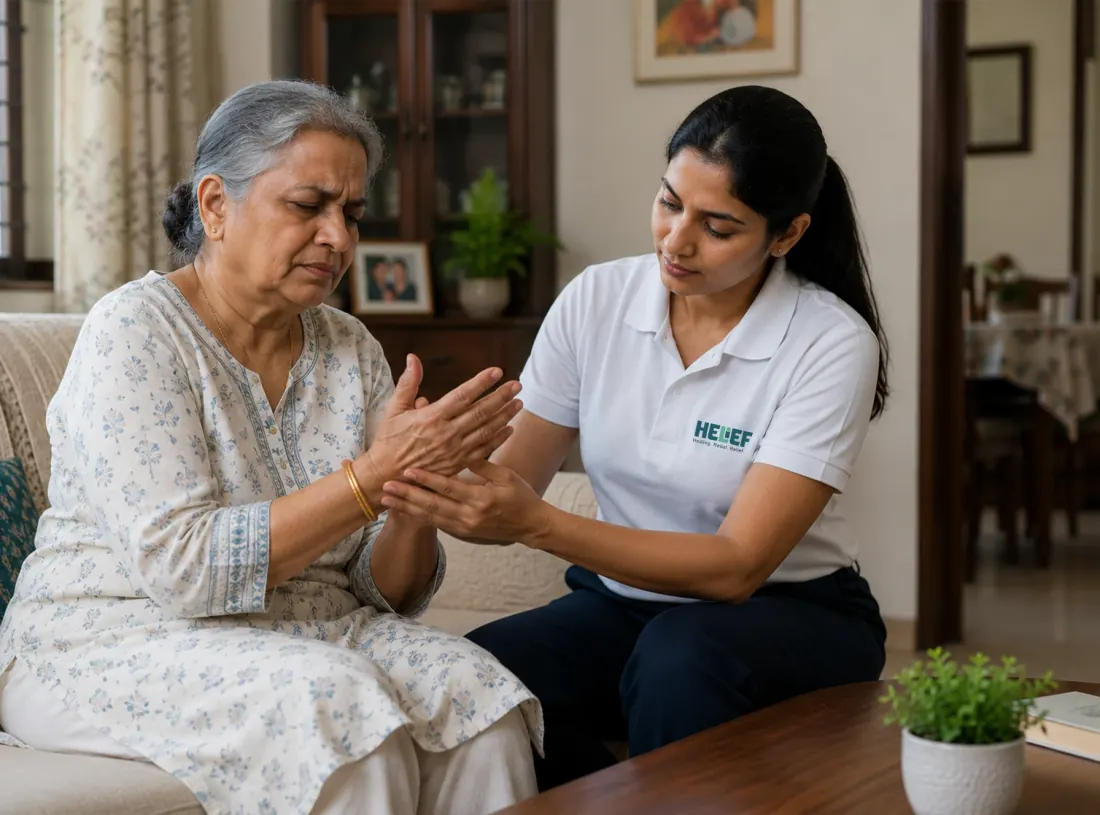
Arthritis can make everyday movement stiff and painful — but staying active is one of the best things for it. Our certified physiotherapists come to your home in Bangalore with a tailored plan that eases joint pain, keeps you moving, and protects your independence.
- 5-Star Rated
- 100+ Happy Patients
- Certified Physiotherapists
Certified Physiotherapists
Verified & background-checked
Quick answer
Arthritis physiotherapy reduces joint pain and stiffness and improves mobility through tailored exercise, hands-on therapy, and joint-protection strategies. While physiotherapy can't reverse joint damage, strong evidence shows that the right exercise programme eases pain, maintains function, and helps people with osteoarthritis and rheumatoid arthritis stay active and independent.
Understanding it
What is arthritis?
Arthritis means inflammation of the joints, and it comes in several forms. The most common is osteoarthritis — the gradual wear of the joint surfaces that typically affects the knees, hips, hands, and spine. Rheumatoid arthritis is an inflammatory, autoimmune condition that causes joint pain, swelling, and stiffness. Both lead to pain and reduced movement, but both respond to well-designed physiotherapy.
It might feel counter-intuitive, but movement is medicine for arthritis. Appropriate exercise keeps joints nourished and mobile, builds the muscle that supports and offloads them, and reduces pain over time. The aim of physiotherapy isn't to 'cure' the arthritis but to keep you moving comfortably, protect your joints, and preserve your independence.
Common symptoms
- Joint pain that's often worse with activity or at the end of the day
- Stiffness, especially first thing in the morning or after resting
- Swelling, warmth, or tenderness around affected joints
- Reduced range of movement and a sense of joints 'seizing up'
- Grinding or creaking in the joint with movement
- Difficulty with everyday tasks — gripping, walking, stairs, or standing up
Common causes
- Osteoarthritis — age-related wear of the joint cartilage
- Rheumatoid and other inflammatory (autoimmune) arthritis
- Previous joint injuries or surgery ('post-traumatic' arthritis)
- Being overweight, which increases load and inflammation in weight-bearing joints
- Genetic and family-history factors
- Repetitive joint loading from certain work or activities
Risk factors
What raises the likelihood
Don't wait it out
When to see a physiotherapist
If any of these sound familiar, an assessment is worth booking. Treating it early usually means a faster, fuller recovery.
Joint pain or stiffness that's limiting your daily activities
Morning stiffness that takes a while to ease off
Difficulty with stairs, walking, gripping, or standing up
Joints that are becoming less mobile over time
A recent arthritis diagnosis and wanting to stay active safely
Seek medical care first
These signs need a doctor or emergency care — not physiotherapy. Please get urgent medical attention if you notice:
- A single hot, red, severely swollen joint with fever (possible joint infection)
- Sudden, severe joint swelling without a clear cause
- Significant unexplained weight loss or feeling generally unwell with the joint pain
- Rapidly worsening weakness or loss of function
Our approach
How Helief treats arthritis at home
Every plan starts with a proper assessment. Your physiotherapist looks at which joints are affected, how much movement and strength you have, how the arthritis is limiting your daily life, and what matters most to you — because an arthritis plan should fit your goals, whether that's climbing stairs comfortably or getting back to a daily walk.
From there, we build a tailored exercise programme that eases pain and maintains function, combined with hands-on therapy for stiff, sore joints and practical joint-protection strategies. We pace everything to your symptoms — challenging enough to help, gentle enough to keep you comfortable — and adjust as you progress.
Treatment techniques
Evidence-based methods we use
Tailored exercise programme
The most evidence-backed treatment for arthritis — strengthening and mobility work matched to your joints and goals.
Manual therapy & joint mobilisation
Gentle hands-on techniques to ease stiffness and improve comfortable movement in affected joints.
Pain & swelling management
Heat, gentle electrotherapy, and pacing strategies to keep pain and swelling manageable.
Joint-protection strategies
Practical ways to use your joints that reduce strain during daily tasks, gripping, and lifting.
Balance & mobility training
Keeping you steady and confident on your feet, which is important as arthritis affects walking.
Activity & weight-management guidance
Advice on pacing, footwear, and reducing load through the joints to slow the impact of arthritis.
Recovery timeline
What progress typically looks like
Every recovery is individual — this is a general guide, not a guarantee. Your physiotherapist sets realistic milestones after the first assessment.
- 1Weeks 1–2
Settle pain, get moving gently
We ease the most troublesome pain and stiffness and introduce gentle, comfortable movement.
- 2Weeks 2–6
Build strength & mobility
A progressive exercise programme builds the muscle that supports your joints and improves how you move.
- 3Weeks 6–12
Restore function & confidence
We progress toward the everyday activities that matter to you — stairs, walking, gripping — with less pain.
- 4Ongoing
Long-term management
Arthritis is managed rather than cured — a sustainable routine keeps you active and comfortable long-term.
Why at home
The advantage of treating arthritis at home
No painful commute to a clinic when joints are stiff and sore
Your physiotherapist adapts exercises to your home, stairs, and daily routine
One-on-one attention every session, paced to how your joints feel that day
Support and guidance that make it far easier to keep moving consistently
Certified physiotherapists, clinical standards, delivered at home
Every arthritis treatment plan is delivered by a qualified, vetted physiotherapist following proper assessment and safety protocols — built around your goals and paced to your recovery.
Book Now
Start arthritis treatment at home
Share your details and we'll call you back to arrange a home visit across Bangalore. A certified physiotherapist assesses the cause before any treatment begins.
Locations we serve
Arthritis physiotherapy across Bangalore
Our certified physiotherapists visit homes right across the city. Pick your area, or message us to check availability near you.
Not on the list? WhatsApp us — we cover much of Bangalore.
FAQ
Arthritis — your questions
Related conditions
You may also be looking for
Knee Pain
Reduce knee pain and stiffness and move freely again — treated at home.
Learn MoreHip Pain
Ease hip pain and stiffness and move with ease again — treated at home.
Learn MoreBack Pain
Lasting relief from lower and upper back pain — treated at the root, at home.
Learn MoreFrozen Shoulder
Restore movement in a stiff, painful shoulder — treated patiently at home.
Learn MoreStart your recovery journey this week
Book a home visit and let a certified physiotherapist come to you — no travel, no waiting rooms.