Frozen Shoulder Physiotherapy at Home in Bangalore
Frozen shoulder is painful, slow, and frustrating — reaching, dressing, and sleeping all become difficult. Our certified physiotherapists bring patient, progressive treatment to your home in Bangalore, easing the pain and steadily restoring the movement in your shoulder.
- 5-Star Rated
- 100+ Happy Patients
- Certified Physiotherapists
Certified Physiotherapists
Verified & background-checked
Quick answer
Frozen shoulder physiotherapy eases pain and restores movement in a stiff, 'frozen' shoulder through manual joint mobilisation, progressive stretching, and strengthening. Recovery is gradual — often several months as the condition moves through its natural stages — and consistent home physiotherapy is one of the most effective ways to shorten it and regain function.
Understanding it
What is frozen shoulder?
Frozen shoulder (adhesive capsulitis) is a condition where the capsule around the shoulder joint becomes inflamed, thickened, and tight — gradually restricting movement and causing pain. It typically develops in stages: a painful 'freezing' phase, a stiff 'frozen' phase, and a slow 'thawing' phase as movement returns.
It can be stubborn and slow, but it does respond to physiotherapy — and the right treatment at the right stage makes a real difference to how fast and how fully you recover. The aim is to manage pain during the early phase and progressively restore movement and strength as the shoulder allows, without forcing it in a way that flares the pain.
Common symptoms
- A deep, aching pain in the shoulder, often worse at night
- Progressive stiffness that limits reaching, lifting, and rotating the arm
- Difficulty with everyday tasks — dressing, fastening a seatbelt, reaching a back pocket
- Pain when lying on the affected side, disturbing sleep
- A shoulder that feels increasingly 'locked' and restricted in every direction
- Reduced ability to raise the arm overhead or behind the back
Common causes
- Inflammation and thickening of the shoulder joint capsule
- A period of shoulder immobility — after injury, surgery, or an arm in a sling
- Diabetes, which significantly raises the risk of frozen shoulder
- Thyroid disorders and other metabolic conditions
- Age and hormonal factors (most common between 40 and 60)
- Often no clear single cause ('primary' frozen shoulder)
Risk factors
What raises the likelihood
Don't wait it out
When to see a physiotherapist
If any of these sound familiar, an assessment is worth booking. Treating it early usually means a faster, fuller recovery.
Shoulder pain with increasing stiffness over weeks
Growing difficulty reaching overhead or behind your back
Night pain that disturbs your sleep
Everyday tasks like dressing becoming harder
Any shoulder that has become stiff after a period in a sling or reduced use
Seek medical care first
These signs need a doctor or emergency care — not physiotherapy. Please get urgent medical attention if you notice:
- Shoulder stiffness following a significant fall or trauma (to rule out fracture or dislocation)
- Severe weakness or inability to lift the arm at all
- Fever with a hot, swollen shoulder
- Numbness or pins-and-needles spreading down the arm
Our approach
How Helief treats frozen shoulder at home
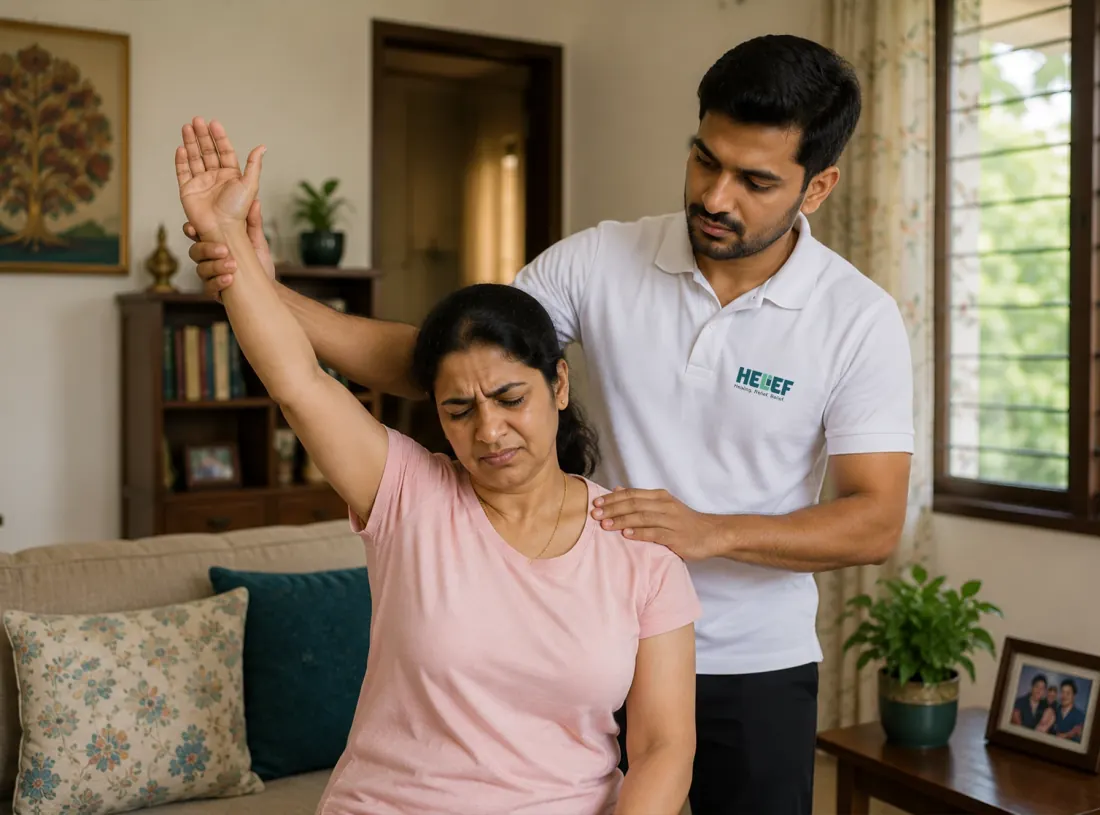
Treatment for frozen shoulder depends heavily on which stage you're in, so the assessment comes first. Your physiotherapist identifies the phase, measures your movement in each direction, and checks how much pain is limiting you — because pushing too hard in the painful early phase can make things worse, while the stiff phase needs steady, progressive stretching.
From there, we match treatment to your stage: pain management and gentle movement early on, then progressive manual therapy, stretching, and strengthening as the shoulder allows. Consistency matters enormously with frozen shoulder, and home visits make it far easier to keep the regular, patient work that this condition rewards.
Treatment techniques
Evidence-based methods we use
Stage-matched treatment
Care carefully matched to your phase — calming pain when it's 'freezing', restoring range as it 'thaws'.
Manual therapy & joint mobilisation
Hands-on techniques that gradually free up the tight joint capsule and improve movement.
Progressive stretching programme
A graded stretching routine that steadily restores range in every direction the shoulder has lost.
Pain management (TENS / IFT, positioning)
Gentle electrotherapy and positioning advice to ease pain — especially the night pain that disturbs sleep.
Strengthening as movement returns
Rebuilding the rotator-cuff and shoulder-blade strength that supports lasting, confident movement.
Daily home routine & activity advice
Simple, safe exercises and practical tips for dressing, sleeping, and daily tasks between sessions.
Recovery timeline
What progress typically looks like
Every recovery is individual — this is a general guide, not a guarantee. Your physiotherapist sets realistic milestones after the first assessment.
- 1Early phase
Control pain, protect movement
During the painful 'freezing' stage we focus on easing pain and keeping gentle, tolerable movement without flaring it.
- 2Stiff phase
Restore range steadily
As pain settles, progressive manual therapy and stretching work to unlock the stiff, restricted shoulder.
- 3Thawing phase
Rebuild strength & function
As movement returns, we add strengthening and functional tasks to restore confident everyday use.
- 4Ongoing
Full function & prevention
We work toward full range and strength, and guide you on keeping the shoulder mobile long-term.
Why at home
The advantage of treating frozen shoulder at home
Regular, consistent sessions at home — exactly what stubborn frozen shoulder responds to
No painful commute jostling an already sore, stiff shoulder
Your physiotherapist tailors exercises to your bed, chairs, and daily tasks
One-on-one attention and guidance on the night-time positioning that protects your sleep
Certified physiotherapists, clinical standards, delivered at home
Every frozen shoulder treatment plan is delivered by a qualified, vetted physiotherapist following proper assessment and safety protocols — built around your goals and paced to your recovery.
Book Now
Start frozen shoulder treatment at home
Share your details and we'll call you back to arrange a home visit across Bangalore. A certified physiotherapist assesses the cause before any treatment begins.
Locations we serve
Frozen Shoulder physiotherapy across Bangalore
Our certified physiotherapists visit homes right across the city. Pick your area, or message us to check availability near you.
Not on the list? WhatsApp us — we cover much of Bangalore.
FAQ
Frozen Shoulder — your questions
Related conditions
You may also be looking for
Neck Pain
Ease stiff, aching necks and tech-neck strain — treated at home.
Learn MoreTennis Elbow
Settle stubborn outer-elbow pain and rebuild grip — treated at home.
Learn MoreArthritis
Manage joint pain and stiffness and stay active — treated at home.
Learn MoreBack Pain
Lasting relief from lower and upper back pain — treated at the root, at home.
Learn MoreStart your recovery journey this week
Book a home visit and let a certified physiotherapist come to you — no travel, no waiting rooms.