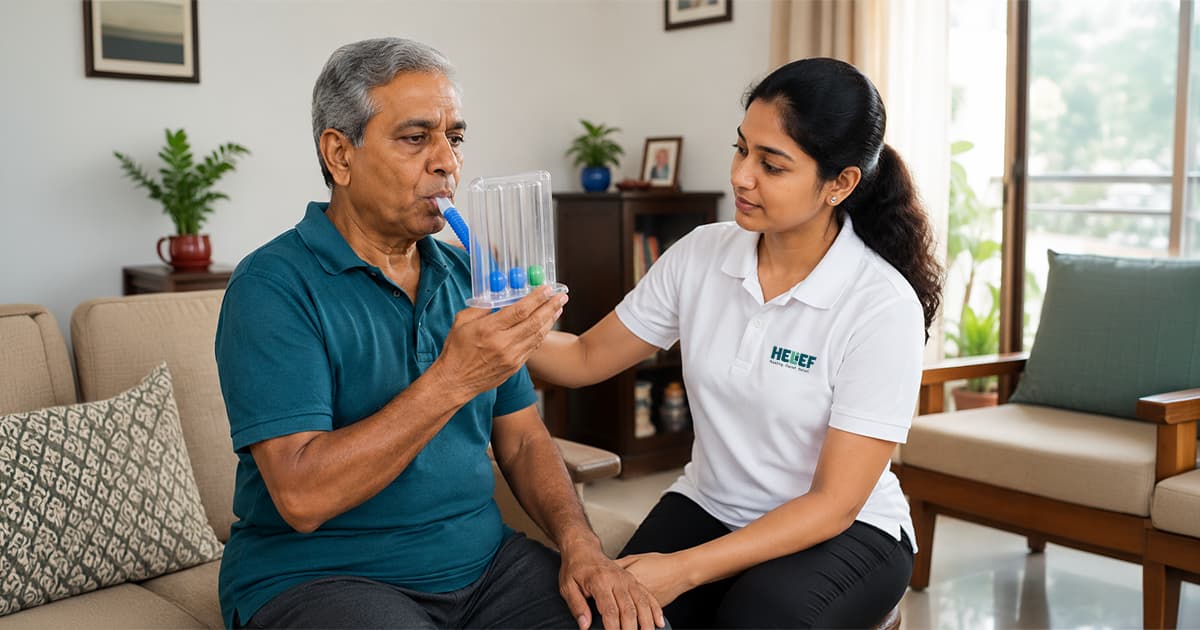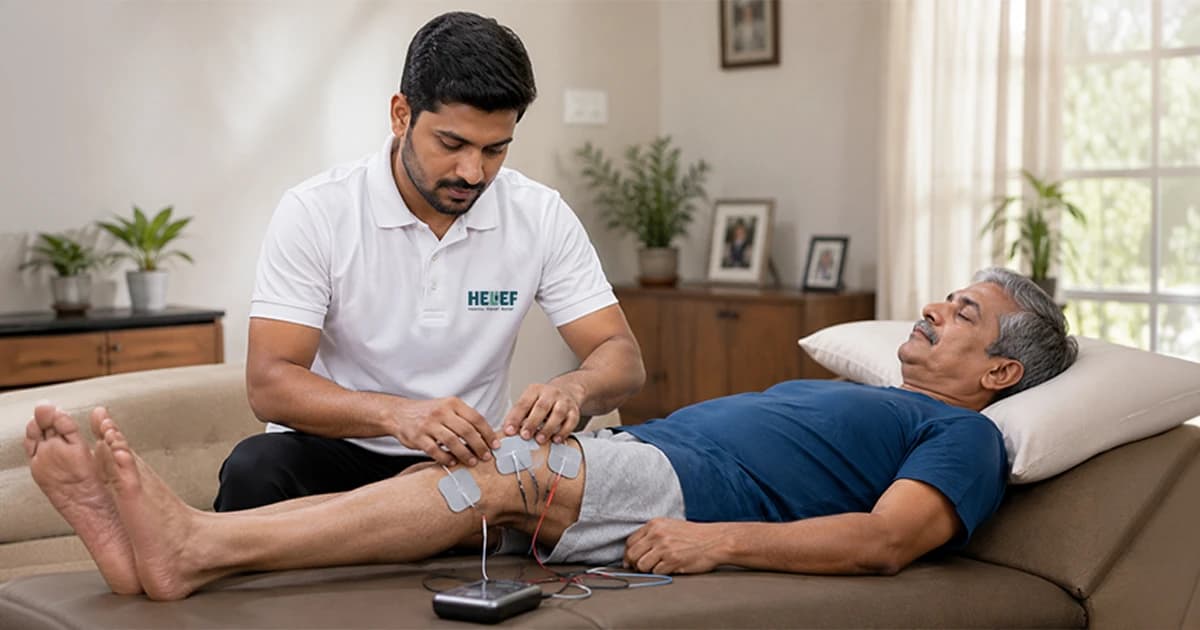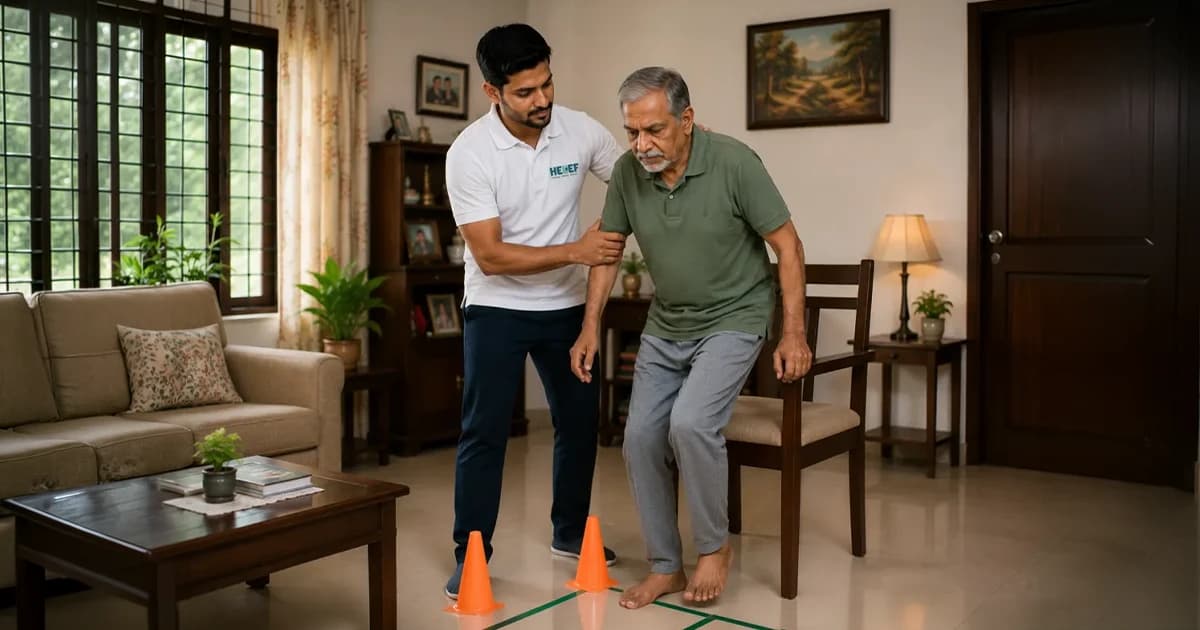
When a family gets a Parkinson's diagnosis, the questions come fast: How quickly will it progress? What can we actually do? And — often unspoken — how do we keep Mum or Dad steady on their feet and living the life they know?
Medication is a big part of the answer, and your neurologist manages that. But there's a second treatment with strong evidence behind it that families often hear about far too late: physiotherapy. Not as an afterthought, and not "once things get bad" — but early, regularly, and ideally in the one place a person with Parkinson's moves most confidently: their own home.
This guide explains what physiotherapy does for Parkinson's, why it works, and what a home-based programme in Bangalore looks like week to week.
What Parkinson's Does to Movement
Parkinson's is a progressive neurological condition in which the brain gradually loses the cells that produce dopamine — the chemical that lets us make smooth, automatic movements. As dopamine falls, movement changes in specific, recognisable ways:
- Bradykinesia — everyday actions become slow and effortful. Buttoning a shirt, rising from a chair, or turning over in bed takes real concentration.
- Rigidity — muscles stiffen, which is tiring and can be painful.
- Tremor — often starting in one hand at rest.
- Small, shuffling steps and a stooped posture — the stride shrinks and the body folds forward.
- "Freezing" — the feeling of being glued to the floor, especially when starting to walk, turning, or passing through a doorway.
- Balance problems — which, combined with freezing, make falls one of the biggest risks in Parkinson's.
Here's the crucial part: many of these changes respond to training. The brain in Parkinson's is still capable of learning — it just needs the right kind of practice, repeated often. That's exactly what physiotherapy provides.
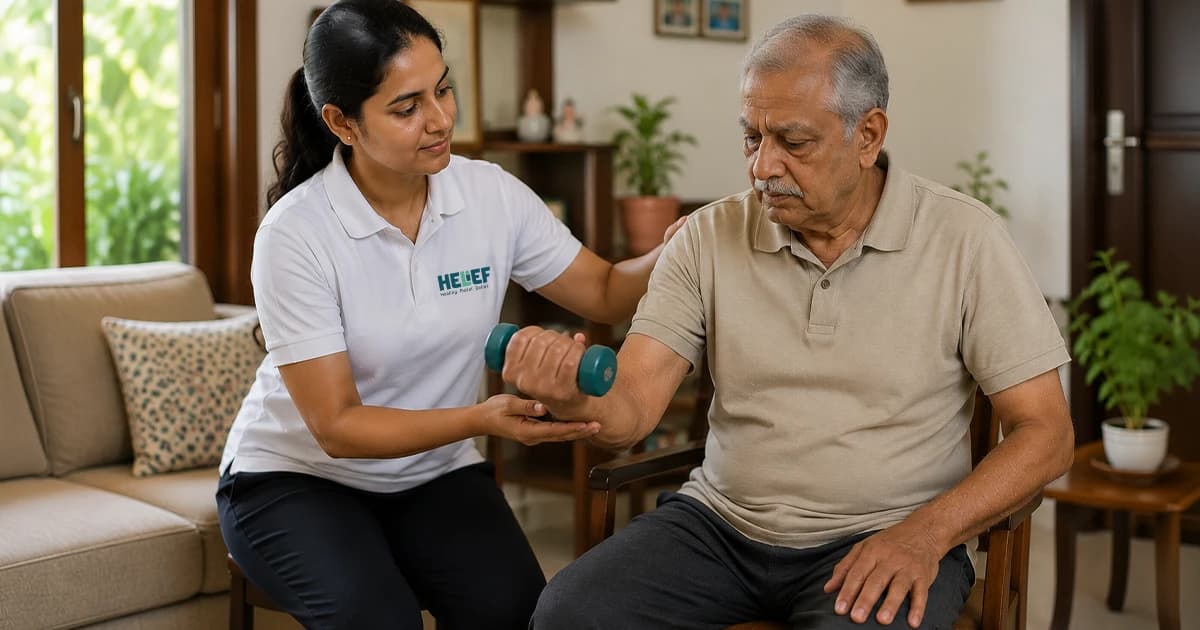
Why Physiotherapy Genuinely Helps — and What It Can't Do
Let's be honest about both sides.
Physiotherapy cannot cure Parkinson's or reverse it. Nobody should promise that. What a large body of research consistently shows is that regular, targeted exercise helps people with Parkinson's move better and for longer — improving walking speed and confidence, steadying balance, countering the stooped posture, and reducing the falls that so often mark a turning point in the condition.
The mechanism is intuitive once you see it. Parkinson's makes movements smaller and slower, and the natural response — moving less to feel safe — accelerates exactly the stiffness and weakness you're trying to avoid. Physiotherapy interrupts that spiral by deliberately training big, deliberate movement and rebuilding the confidence to keep moving.
The single biggest predictor of whether it works is consistency. And consistency is precisely where home-based care changes the equation.
Why Home Is the Right Setting for Parkinson's Care
For most conditions, home physiotherapy is a convenience. For Parkinson's, it's often clinically better:
- You practise where you live. Freezing happens at your doorways, on your stairs, turning in your kitchen. Training in the real environment transfers directly to daily life in a way a clinic gym can't replicate.
- No exhausting commute. Parkinson's fatigue is real, and "on/off" medication cycles make travel unpredictable. A session at home means the person arrives at their exercise already rested, not drained.
- Falls are safest to work on at home. Balance training carries some risk. Doing it in the actual space — with the physiotherapist assessing your rugs, thresholds, bathroom, and chair heights — means fall prevention is built into the real setting.
- The family learns alongside. Cueing and safe-movement techniques work best when a spouse or son or daughter knows them too. At home, they're in the room.
We provide home physiotherapy across Bangalore, from Indiranagar and Koramangala to JP Nagar, Jayanagar, Whitefield and beyond.
What a Home Programme Actually Involves
Every plan begins with an assessment — how Parkinson's is affecting gait, balance, posture, and daily function, and what matters most to the person, whether that's walking to the gate safely, getting out of a chair unaided, or reducing freezing. Because Parkinson's affects everyone differently and changes over time, the programme is reviewed and adapted regularly, not fixed once.
The work centres on the strategies evidence supports for Parkinson's:
Large-amplitude ("big") movement training
Because Parkinson's shrinks movement, the antidote is to practise deliberately large, exaggerated movements. Training the body to "think big" measurably improves stride length, arm swing, and everyday actions.
Gait retraining and cueing
Visual cues (a line on the floor to step over) and rhythmic cues (a beat to walk to) are remarkably effective at overcoming freezing and smoothing out walking. Your physiotherapist teaches cueing tricks the person and family can use anywhere.
Balance training and fall prevention
Targeted balance work — combined with a practical look at home hazards — directly reduces the falls that are among the most serious risks in Parkinson's.
Posture and flexibility
Exercises to counter the forward-stooped posture and the rigidity that stiffens the trunk and limbs, keeping the body upright and mobile.
Strength, endurance and daily-routine coaching
Maintaining muscle and stamina to support real activity — plus coaching on safe ways to get in and out of bed, rise from chairs, and turn without freezing.
This is the same stroke and neurological care approach our certified neuro physiotherapists bring to every home visit — and you can read more about our dedicated Parkinson's physiotherapy programme and how it's tailored stage by stage.
When to Start — and Why "Now" Is the Answer
The most common mistake families make is waiting. There's an instinct to hold physiotherapy in reserve for "when it gets worse." The evidence points the other way: starting early, soon after diagnosis, helps maintain function and builds habits and strength while they're easiest to build. And it genuinely helps at every stage after that too — there is no point in Parkinson's where movement training stops being worthwhile.
You should think seriously about starting if:
- A diagnosis is recent — this is the ideal moment to begin.
- Walking, balance, or freezing episodes are becoming a problem.
- Falls, or a growing fear of falling, are creeping in.
- Posture or stiffness is affecting daily activities.
A Note for Caregivers
If you're the spouse, son, or daughter reading this at 11pm, worried: physiotherapy helps you too. It gives you concrete techniques instead of helpless watching — how to cue a freeze, how to help safely without hurting your own back, how to set up the home so a fall is less likely. Watching a parent slow down is hard. Having a clear, active plan makes it more bearable, for them and for you.
Frequently Asked Questions
Can physiotherapy cure Parkinson's disease? No — nothing currently cures or reverses Parkinson's, and any provider who promises that isn't being honest. What physiotherapy does, with strong research behind it, is help people move better and for longer: improving walking, balance, and posture, reducing falls, and helping maintain the independence the condition threatens.
When should someone with Parkinson's start physiotherapy? As early as possible — ideally soon after diagnosis. Starting early helps maintain function and builds strength and good movement habits while they're easiest to build. That said, physiotherapy is valuable at every stage of Parkinson's, so it's never too late to begin.
Is home physiotherapy better than going to a clinic for Parkinson's? For Parkinson's it often is. Practising in the real home environment — the actual doorways, stairs, and chairs where freezing and falls happen — transfers directly to daily life, avoids the fatigue of commuting during unpredictable on/off medication cycles, and lets the family learn the cueing and safety techniques alongside the patient.
How often are sessions needed? It varies by stage and goals, but the single biggest factor in results is consistency. Most programmes combine regular physiotherapist-led sessions with a short daily home-exercise routine the person practises between visits. Your physiotherapist sets a realistic cadence at the assessment and adapts it as things change.
Parkinson's changes the pace of life, but it doesn't have to mean giving up movement, steadiness, or independence — not yet, and not quickly. The families who do best are the ones who start early and stay consistent. A free home assessment is a straightforward first step: an honest look at where things stand and a practical plan for keeping your loved one moving.