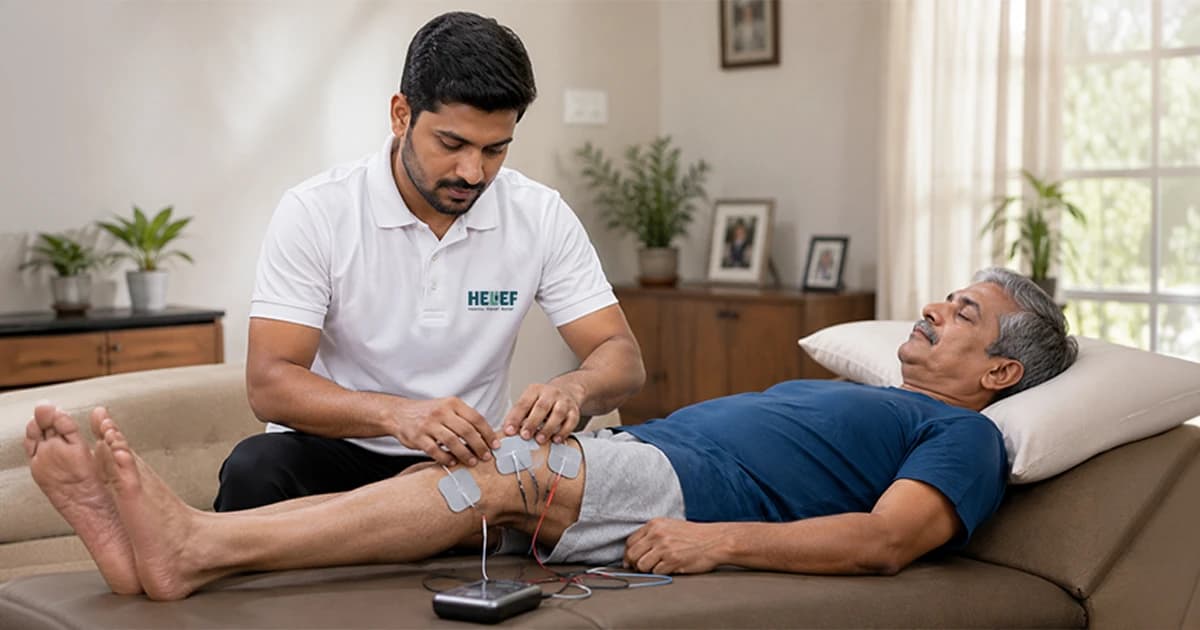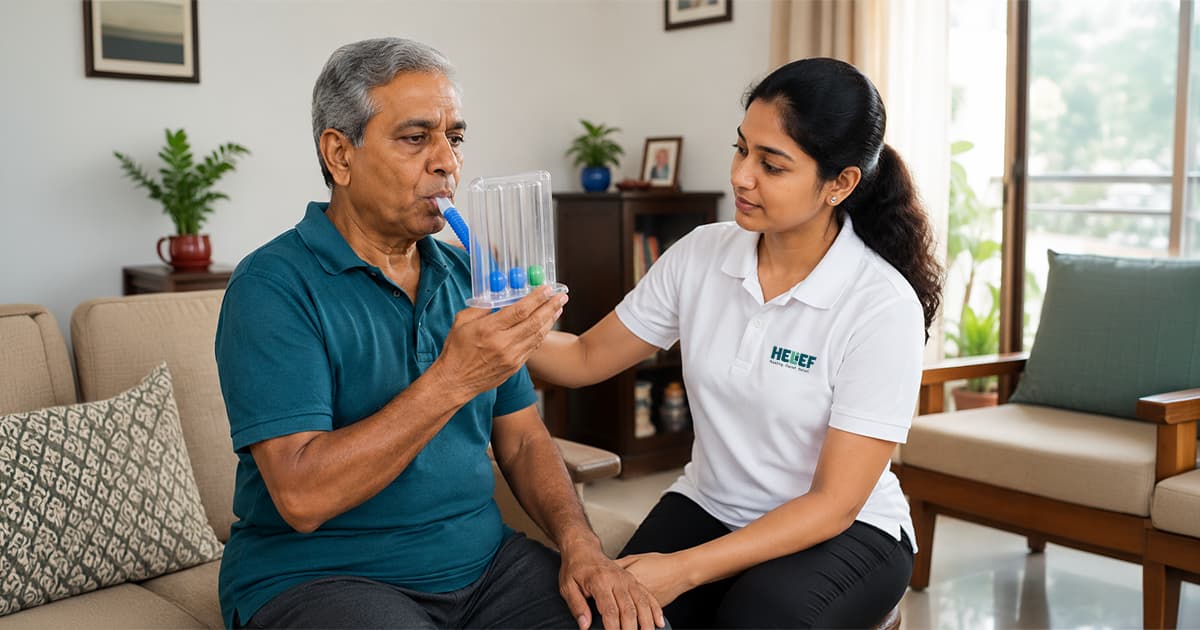
Breathlessness has a way of arriving quietly. A flight of stairs takes two rests instead of none. A short walk to the gate leaves someone reaching for a chair. Nobody names it as a problem — they just start doing less.
That quiet shrinking is exactly what cardio-respiratory physiotherapy exists to reverse, and most families don't know it's an option until months after it would have helped most.
Here are six situations where it's worth calling someone.
1. Breathlessness Has Started Rewriting the Day
The pattern is almost always the same. First it's the stairs. Then it's the walk to the market. Then it's getting up from the sofa without pausing halfway. Nobody decides to move less — the body just starts avoiding whatever triggers the breathlessness, and avoidance quietly becomes the new normal — until the new normal is all that is left.
This matters because inactivity and breathlessness feed each other. Move less — even for a few weeks — and the muscles that support breathing and walking get weaker. Get weaker, and the same walk costs more effort than it did last month. Within a few months, someone who managed the market fine in spring is housebound by winter — and the story everyone tells is "they're just getting older."
Watch for: stopping mid-sentence to catch a breath, taking rest breaks on stairs that never used to need them, avoiding outings that involve walking, or a general sense that daily life has quietly gotten smaller.
Cardio-respiratory physiotherapy breaks that cycle with breathing retraining and exercise dosed to what the lungs can actually handle that week, not a fixed program that ignores how someone is feeling.
2. Breathlessness or Fatigue That Never Left After COVID
For a large group of people, the infection cleared and the tiredness didn't. Months later, a walk that used to be effortless now needs planning. Climbing one flight leaves someone winded for several minutes. Concentration comes and goes. It's often dismissed as "post-COVID fatigue," which is a real name, but the phrase alone doesn't answer what to do about it.
Structured, gradual reconditioning helps a meaningful share of these patients, and the emphasis on gradual matters. Pushing too hard too soon is the single most common way people set themselves back, since post-viral breathlessness is unusually sensitive to overexertion in a way ordinary deconditioning isn't.
Watch for: breathlessness that's disproportionate to the activity, fatigue that doesn't lift with rest, or a "crash" the day after doing more than usual.
3. Recovering From Chest, Abdominal, or Heart Surgery
Surgery near the chest or upper abdomen makes every deep breath hurt, so the body's instinct is to breathe shallow and skip the deep breaths and coughs that clear the lungs. That instinct is exactly the wrong one — shallow breathing is the easier choice in the moment and the worse one within a day. Shallow breathing after surgery is one of the more common routes to a post-operative chest infection, and it's largely preventable.
Chest physiotherapy after surgery is unglamorous — and genuinely effective: supported coughing, positioning, and breathing exercises that keep the lungs properly ventilated while a wound heals. None of it needs a hospital bed. It needs someone who knows the techniques and enough consistency to do it several times a day, which is far easier to manage in the room where the patient is actually recovering.
Watch for: shallow, guarded breathing after chest or abdominal surgery, a cough the patient is avoiding because of pain, or any fever or chest tightness in the days after discharge — the last one needs a doctor, not just a physiotherapist.
4. Recovering From a Heart Attack, Angioplasty, or Cardiac Surgery
Cardiac rehabilitation is one of the best-evidenced interventions in heart disease — and one of the most underused, mostly because getting to a hospital programme three times a week is genuinely hard for a family managing a recent cardiac event. Home-based cardiac rehab exists precisely to close that gap.
It is not the right fit for everyone at every stage. This is the one item on this list where cardiologist clearance comes first, and it stays first — a patient with uncontrolled arrhythmia, unstable angina, or decompensated heart failure needs a monitored setting, not a home visit, and a properly run programme will say so rather than take the booking regardless.
Watch for: a recent cardiac event with a green light from the cardiologist for rehabilitation, uncertainty about how much activity is actually safe, or simply the logistics of hospital-based sessions not being realistic for the family right now.
5. Recurring Chest Infections, Especially in Elderly Parents
This is the pattern that sends families back to the hospital again and again without anyone naming the actual mechanism: a cough too weak to clear the lungs properly, made worse by spending most of the day sitting or lying down. Each infection leaves a little less reserve than before — which makes the next one more likely, not less.
Airway clearance techniques, assisted coughing, positioning, and simply getting someone upright and moving more all interrupt that cycle directly. This is one of the clearer cases in respiratory physiotherapy where the right home programme reduces hospital admissions instead of just responding to them after the fact — worth acting on before the third or fourth readmission, not after.
Watch for: more than one chest infection in a year, a cough that sounds wet but doesn't clear anything, or an elderly parent who spends most of the day in one chair.
6. A Diagnosed Lung Condition That's Getting Harder to Manage
COPD, bronchiectasis, and interstitial lung disease don't reverse with physiotherapy, and nobody should be promised that they do. What changes with the right programme is how far someone can walk before breathlessness stops them — how much a given amount of activity costs them, how often flare-ups land them back in hospital. Pulmonary rehabilitation carries some of the strongest evidence in respiratory medicine for exactly those three outcomes.
The frustrating part is how often this gets skipped simply because getting to a pulmonary rehab clinic is its own exhausting task for someone who is already breathless. Delivering the same programme at home removes that barrier entirely.
Watch for: a known lung diagnosis with symptoms that have crept up over recent months, more frequent flare-ups than before, or a pulmonary rehab referral that never got followed up on.
Who's Actually Behind the Programme
At Helief, cardio-respiratory physiotherapy is led by physiotherapists who treat this specifically rather than as an add-on to general rehab. Dr. Krishnendhu and Dr. Nagasowmya K both specialise in it alongside stroke and geriatric care, which matters here — breathlessness in an older adult is rarely just a lung problem in isolation, and a physiotherapist who sees the whole picture tends to catch what a single-issue approach misses — a swallowing problem, a medication side effect, a mobility issue nobody connected to the breathing at all.
What a First Visit Actually Involves
Nobody starts with a workout. The first visit is an assessment: oxygen levels, breathing pattern, cough strength, and exactly how far someone can walk before breathlessness stops them — plus a look at discharge summaries and current medication, since none of this happens in isolation from the rest of a patient's care. From there the plan is airway clearance and breathing retraining first, graded exercise layered in as tolerance allows, and a home programme the family can keep running between visits.
The Bottom Line
None of these six signs are rare, and none of them are things families are usually told to watch for until they're already deep into a hospital-and-recovery cycle. Breathlessness that's quietly shrunk someone's world, a cough that keeps landing them back in hospital, or a recovery from surgery that isn't going the way it should — these are treatable, not just something to manage around.
The earlier a physiotherapist sees it, the smaller the problem tends to be — that is the entire case for calling sooner rather than later.
Frequently Asked Questions
Can physiotherapy actually help with breathlessness? Yes, and the evidence for it is strong. Pulmonary rehabilitation — supervised, graded exercise combined with breathing techniques and education — is one of the best-supported treatments in respiratory medicine for COPD and other chronic lung disease. It doesn't reverse the underlying condition, but it reliably improves how far someone can walk, how breathless they feel doing it, and how often they end up back in hospital.
Is home cardiac rehabilitation actually safe after a heart attack or surgery? For patients assessed as low to moderate risk, home-based cardiac rehab performs comparably to hospital programmes, and often has better completion rates since nobody has to arrange transport three times a week. It requires cardiologist clearance first, and higher-risk patients need a monitored setting instead.
My elderly parent keeps getting chest infections. Is this related? Often, yes. Recurring chest infections in older adults are frequently driven by a cough too weak to clear secretions properly, made worse by inactivity. Airway clearance techniques and getting someone upright and moving more both interrupt that cycle directly.
Do I need a doctor's referral before booking a session? Not for a general assessment of breathlessness or deconditioning. For anything cardiac, or for unstable or newly diagnosed respiratory conditions, a recent discharge summary and reports are needed, and the treating doctor is consulted before exercise begins.
How is this different from a general home physiotherapy session? It uses techniques a general session doesn't: airway clearance, breathing retraining, oxygen and exertion monitoring, and exercise progressed against cardiac or respiratory risk rather than joint or muscle recovery. It's delivered by physiotherapists who specialise in this specifically, not as a general add-on.
What does a home cardio-respiratory physiotherapy session cost in Bangalore? It follows the same session pricing as other home physiotherapy visits — no separate or higher rate for this specialisation.
If any of this sounds familiar, book a free home assessment and a physiotherapist will tell you honestly what's going on and what to expect — no obligation, just clarity.