Knee replacement has one of the highest satisfaction rates in orthopaedic surgery. Yet physiotherapists keep meeting patients six months out who still can't climb stairs normally, still walk with a limp they never had before, or can't sit comfortably in a car.
Almost none of those outcomes trace back to the operation — they trace back to the weeks after it. Here are the 7 mistakes we see most often after knee replacement surgery, every one of them avoidable, and most of them made by patients who thought they were doing the sensible thing.
What should you avoid after knee replacement surgery? (Quick answer)
The biggest mistakes after knee replacement are resting the knee to protect it, and stopping physiotherapy once it feels better. Both feel sensible and both cost you range of movement you may not get back. Recovery is driven by how consistently the knee is moved and loaded, not by how carefully it is rested.
Everything below is the detail behind that. If you want the week-by-week version of what recovery should look like instead, we've mapped it out in our knee replacement recovery guide.
The 7 mistakes at a glance
| # | The mistake | What it costs you |
|---|---|---|
| 1 | Waiting until after surgery to start | A slower, harder first two weeks |
| 2 | Resting the knee to protect it | Range of movement, sometimes permanently |
| 3 | Judging progress by pain, not bend | You miss the number that actually matters |
| 4 | Staying on the walker too long | Strength, balance and confidence |
| 5 | Letting a limp settle in | A gait pattern that outlasts the pain |
| 6 | Stopping when it feels fine | Strength and stability the joint needs long term |
| 7 | Not knowing which symptoms need a surgeon | Time, on the few problems where time matters |
1. Waiting until after the surgery to start physiotherapy
The best week of your rehabilitation happens before the operation.
Strengthening the quadriceps beforehand is called prehabilitation — and patients who arrive at surgery with a stronger leg tend to have an easier first fortnight. The muscle loss that follows surgery is temporary, but it starts from wherever you were on the day, so the higher that starting point, the shorter the climb back.
Two or three weeks is enough to matter — and if your surgery is already booked and nobody has mentioned this to you, it's worth asking about.
2. Protecting the knee by keeping it still
The instinct to rest a painful joint is exactly backwards after this operation.
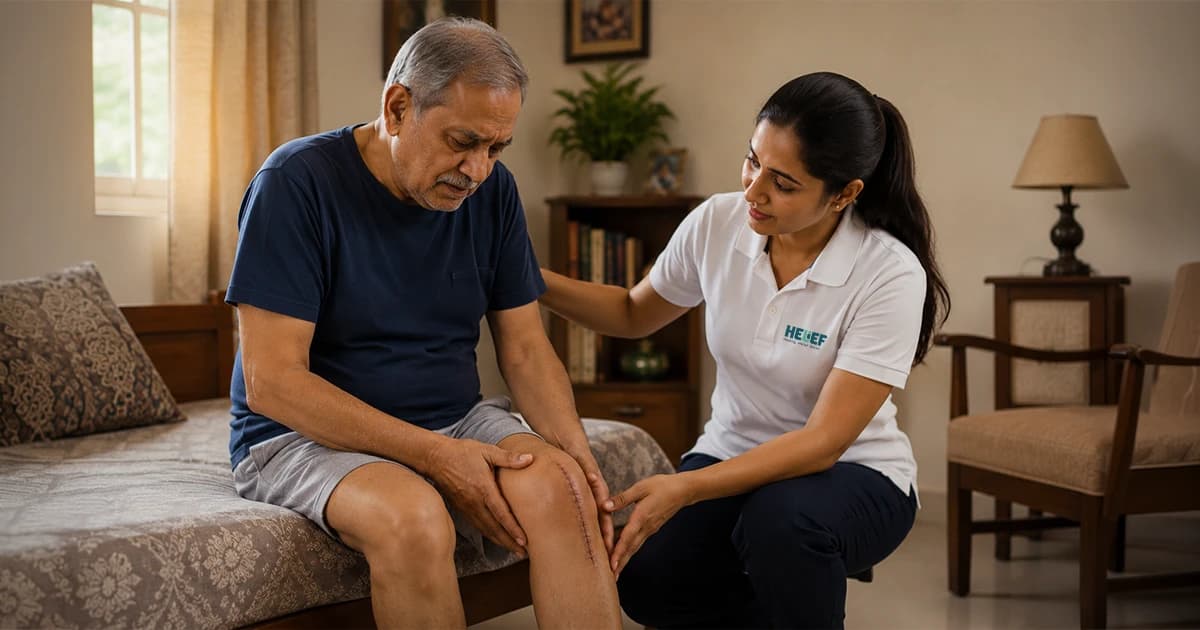
A new knee stiffens quickly — and stiffness that sets in during the first weeks is the hardest thing to reverse later. Scar tissue forms around a joint that isn't moving, and once it has matured, gaining that range back takes far longer than it would have taken to keep it.
This is the mistake families accidentally encourage. Everyone wants to help someone in pain rest — but gentle, frequent movement in those early days is doing more for the knee than stillness ever will. Your physiotherapist's job is partly to give you permission to move it.
.webp&w=3840&q=75)
3. Judging progress by pain instead of bend
Pain tells you how today is going. Range of movement tells you how the recovery is going.
Most patients track how much the knee hurts, which is understandable and almost useless as a progress measure — pain fluctuates with sleep, weather, activity and mood. The number that predicts your long-term function is how far the knee bends.
Roughly 90 degrees — a right angle — is the early milestone. Around 100 is what comfortable stair climbing asks for, and 110 to 120 covers most of ordinary life: cars, low chairs, floor-level tasks. Ask your physiotherapist to measure it and tell you the number. A recovery where pain is improving but bend has stalled needs a change of plan — and you won't spot that by feel alone.
4. Leaning on the walker longer than you need to
A walking aid you've outgrown quietly trains you to walk badly.
The frame is essential early on — a genuine safety net. The problem is that it's comfortable, and comfort is a poor guide to readiness. Patients who stay on it past the point of need keep loading the good leg, keep under-loading the new knee, and lose the balance work that walking unaided actually builds.
Coming off it is a graded process rather than a decision you make one morning — frame, then a stick, then nothing, with someone watching each step down. That progression is a normal part of post-surgery rehabilitation, and it should be planned rather than guessed at.
5. Letting a limp settle in
Six weeks of limping while it hurts can leave a limp that lasts years after it stops.
Nearly everyone walks unevenly in the painful early phase — and that's fine. What's not fine is that the brain is efficient: repeat a movement pattern often enough and it becomes the default, whether or not the reason for it still exists. Plenty of people arrive for walking difficulty treatment months later with a knee that no longer hurts and a gait that never went back to normal.
Correcting it early is straightforward. Correcting it a year on means unlearning something well practised — much slower, and it takes more sessions.
6. Stopping physiotherapy when the knee feels fine
This is the most common mistake on the list, and the one that costs the most.
Somewhere around weeks seven to twelve the knee starts feeling genuinely good. Walking is easy, stairs are manageable, life looks normal — so rehabilitation gets scaled back, then quietly abandoned.
Inside the joint, the work isn't finished. Strength is well short of where it needs to be for long-term joint health — and balance and joint position sense both lag behind how good the knee feels. Stopping here is what leaves people with a knee that works fine on flat ground and lets them down on a kerb, a wet floor, or a staircase in a hurry. That gap is also a genuine fall risk — one that matters more with every passing year, and worth reading alongside balance problems and falls.
7. Not knowing which symptoms belong to the surgeon
Most post-surgical discomfort is normal — a short list of things are not, and those need a doctor rather than a physiotherapist.
Swelling, warmth and aching are expected for weeks. What warrants a call to your surgeon or urgent medical attention is a different category: fever, a wound that becomes red, hot or starts discharging, calf pain or swelling that appears on its own, sudden breathlessness or chest pain, or a knee that abruptly loses movement it previously had.
None of that is a reason for anxiety — these problems are uncommon. But knowing the list means you act quickly on the few occasions when acting quickly is what matters — instead of waiting for your next physiotherapy session to mention it.
How to tell whether your recovery is drifting
Forget the calendar for a moment. These are the signals worth watching.
| On track | Drifting |
|---|---|
| Bend is improving week on week | Bend has been the same for two weeks |
| Walking aid use is reducing | Still on the same aid you started with |
| Walking looks smoother to family | Everyone still comments on the limp |
| You know your current range in degrees | Nobody has measured it |
| A plan exists past week 12 | Sessions stopped when it felt better |
One row in the right-hand column isn't a crisis. Three or more means the programme needs revisiting — and that conversation is worth having with your physiotherapist rather than waiting to see whether it settles.
Where Helief fits
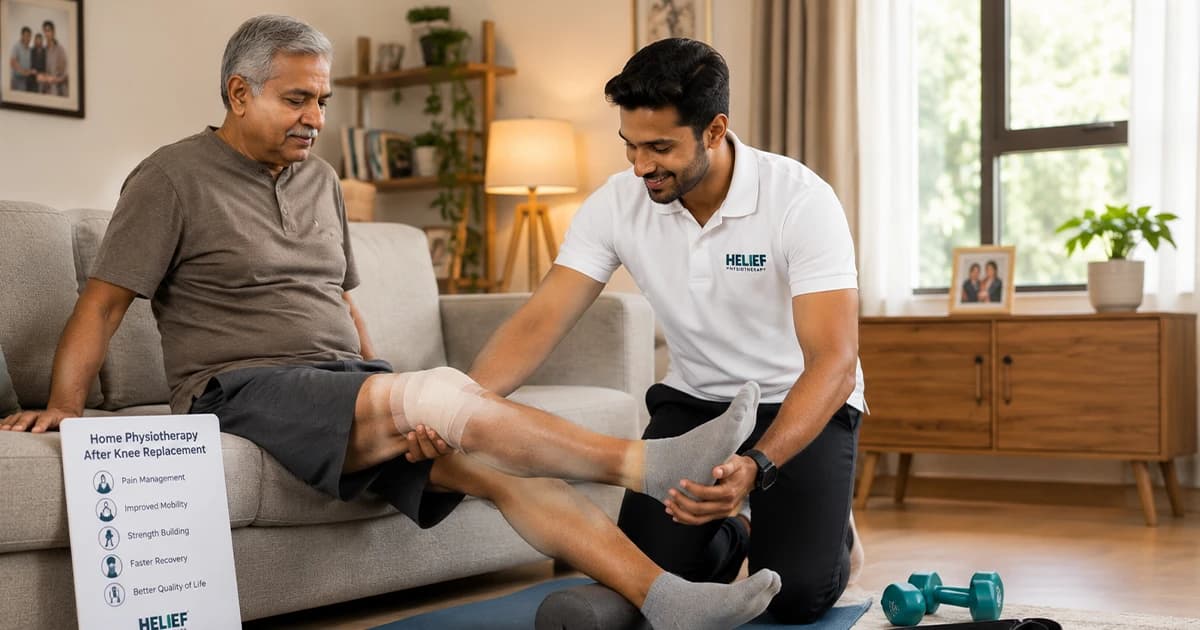
Helief provides post-surgery physiotherapy at home across Bangalore, starting from the day you're discharged — which is precisely the window where travelling to a clinic is hardest and consistency matters most.
Sessions happen on your stairs, with your chairs and your bathroom — so the practice is the real thing rather than a rehearsal. We measure range of movement and tell you the number, we plan the step down from frame to stick to nothing, and we coach whoever is helping you at home so the work continues between visits.
The bottom line
Nearly every mistake on this list comes from the same instinct: treating a new knee like an injury that needs protecting. It isn't — it's a joint that needs moving, loading and retraining, on a schedule that keeps going well after it stops hurting.
The patients who do best are rarely the ones with the least pain in week two — they're the ones still doing the work in week twelve, when the knee already feels fine and the temptation to stop is strongest.
Frequently Asked Questions
What should you not do after knee replacement surgery? Avoid resting the knee to protect it, and avoid stopping physiotherapy once it feels better — both cost range of movement and strength that are difficult to regain later. Also avoid staying on a walking frame past the point of need, and avoid twisting or pivoting on the operated leg until your physiotherapist confirms you're ready.
How long does physiotherapy take after knee replacement? Most patients need around 20 to 24 sessions across 10 to 12 weeks — more frequent in the early phase, tapering as independence returns. Recovery continues past that window, so a maintenance plan for strength and balance matters even once formal sessions end.
Is it too late to start physiotherapy months after knee replacement? No. Late rehabilitation is always better than none, and stiffness, weakness and an altered walking pattern all still respond to treatment. It generally takes longer than it would have early on — so the programme gets adapted to where you actually are, rather than where the timeline says you should be.
How much knee bend should I have after knee replacement? Around 90 degrees is the early milestone, roughly 100 degrees supports comfortable stair climbing, and 110 to 120 degrees covers most daily activities. Ask your physiotherapist to measure it rather than estimating — bend is the number that tracks recovery most reliably.
Can I do knee replacement physiotherapy at home in Bangalore? Yes — and the early weeks are when home treatment has the clearest advantage, since travelling is painful and least safe exactly when consistent rehabilitation matters most. Sessions cover range of movement, safe weight-bearing, gait retraining and stair practice using your own home.
How much does home physiotherapy after knee replacement cost? A standard follow-up session by a certified BPT physiotherapist typically ranges from ₹650 to ₹1,250 in Bangalore — the initial assessment is usually higher. Our guide to home physiotherapy cost breaks down what a session includes and how to budget a full course.
Recovering from knee surgery, or preparing for one? Read our week-by-week knee replacement recovery guide for what each stage should look like, see the full range of conditions we treat at home, or check that we cover your area of Bangalore. Book a home visit and we'll assess where your recovery actually is, and what it needs next.