Alzheimer's Physiotherapy at Home in Bangalore
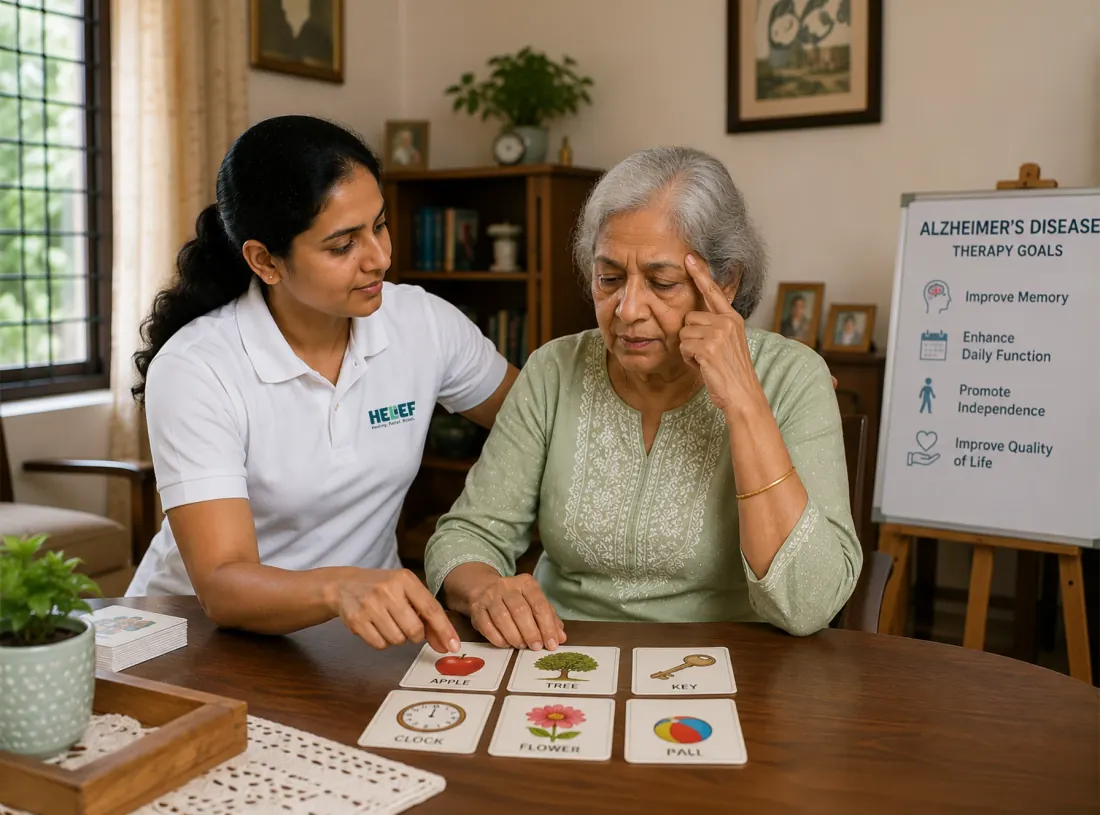
As Alzheimer's progresses, keeping a loved one mobile and safe on their feet becomes as important as anything else. Our certified physiotherapists bring calm, patient care to your home in Bangalore — maintaining strength, balance, and daily function in the familiar surroundings where the person is most at ease.
- 5-Star Rated
- 100+ Happy Patients
- Certified Physiotherapists
Certified Physiotherapists
Verified & background-checked
Quick answer
Physiotherapy for Alzheimer's doesn't treat memory — it addresses the physical decline that comes with the disease: weakening muscles, unsteady walking, poor balance, and a rising risk of falls. Regular, gentle, structured movement helps maintain mobility, independence, and dignity for longer, and home-based care keeps the person calm and cooperative.
Understanding it
What is alzheimer's disease?
Alzheimer's disease is the most common cause of dementia — a progressive condition that gradually affects memory, thinking, and, over time, physical ability. As it advances, walking becomes slower and less steady, balance declines, muscles weaken from reduced activity, and the risk of falls rises sharply. These physical changes can be as disabling as the memory loss itself.
Physiotherapy can't slow the memory changes of Alzheimer's, and we're honest about that. What it does do is address the physical side: keeping the body strong, steady, and moving well for as long as possible. Regular guided movement also tends to improve sleep and mood and reduce agitation — and doing it at home, in familiar surroundings, keeps the person calmer and more willing to take part.
Physical challenges we address
- Slower, less steady walking and a shuffling gait
- Poor balance and a rising risk of falls
- Muscle weakness and stiffness from reduced activity
- Loss of confidence and reluctance to move
- Difficulty with transfers — getting up from a chair or bed
- Restlessness, wandering, or agitation that movement can ease
Common causes
- Progressive changes in the brain (build-up of amyloid and tau proteins)
- Increasing age — the biggest risk factor
- Family history and genetic factors
- Cardiovascular risk factors such as high blood pressure and diabetes
- The exact cause is not fully understood
Staying mobile
What affects mobility and safety
Don't wait it out
When to see a physiotherapist
If any of these sound familiar, an assessment is worth booking. Treating it early usually means a faster, fuller recovery.
When walking or balance is starting to decline
After a fall, or if falls are becoming more frequent
If the person is becoming less active and weaker
If transfers — getting up from a chair or bed — are getting harder
At any stage — physiotherapy helps maintain mobility throughout
Seek medical care first
These signs need a doctor or emergency care — not physiotherapy. Please get urgent medical attention if you notice:
- A sudden, marked change in alertness or confusion (possible delirium or infection — seek medical review)
- A fall causing a head injury, severe pain, or inability to move a limb
- New one-sided weakness or facial droop (possible stroke — call emergency services)
- Choking, difficulty swallowing, or recurrent chest infections
Our approach
How Helief treats alzheimer's disease at home
Every plan starts with a gentle assessment of mobility, balance, strength, and fall risk — carried out patiently, in the calm of home, where a person with Alzheimer's is most comfortable and cooperative. We also look at the home environment for the hazards that cause most falls, and set realistic goals with the family.
The work is built around safe, structured movement adapted to the person's cognitive stage and attention span: strengthening, balance and gait practice, and transfer training, always paced and never rushed. Consistency and familiar routine matter enormously, so we coach family and carers on simple activities to continue between visits — making everyday movement part of the care.
Treatment techniques
Evidence-based methods we use
Balance & fall prevention
Targeted balance work and home-hazard advice to reduce the falls that pose one of the biggest risks in Alzheimer's.
Strength & mobility maintenance
Gentle strengthening and walking practice to keep the body active and independent for as long as possible.
Gait & transfer training
Practising safe walking and getting in and out of chairs and bed, protecting independence and reducing carer strain.
Calm, familiar-cue approach
Simple, consistent, patient sessions using familiar routines and cues, adapted to the person's attention span.
Contracture prevention
In later stages, gentle movement and positioning to keep joints mobile and prevent painful stiffness.
Family & carer coaching
Teaching safe handling, transfers, and simple daily movement so care continues confidently between visits.
Recovery timeline
What progress typically looks like
Every recovery is individual — this is a general guide, not a guarantee. Your physiotherapist sets realistic milestones after the first assessment.
- 1Getting started
Assess & build routine
A gentle assessment of mobility and fall risk, and a simple, familiar movement routine the person can sustain.
- 2Ongoing
Maintain mobility & safety
Regular sessions to keep strength, balance, and walking as good as possible and reduce falls.
- 3As the condition progresses
Adapt the care
The plan evolves with the person's needs — from active strengthening toward preventing stiffness and maintaining comfort.
- 4Later stages
Comfort & dignity
Gentle movement, positioning, and carer support to keep the person comfortable and cared for with dignity.
Why at home
The advantage of treating alzheimer's disease at home
A familiar environment keeps a person with Alzheimer's calm, safe, and far more cooperative than a clinic
No distressing, disorienting travel across Bangalore
The therapist fixes the actual fall hazards in the person's own home
Family and carers are coached to continue safe movement every day
Certified physiotherapists, clinical standards, delivered at home
Every alzheimer's disease treatment plan is delivered by a qualified, vetted physiotherapist following proper assessment and safety protocols — built around your goals and paced to your recovery.
Book Now
Start alzheimer's disease treatment at home
Share your details and we'll call you back to arrange a home visit across Bangalore. A certified physiotherapist assesses the cause before any treatment begins.
Locations we serve
Alzheimer's Disease physiotherapy across Bangalore
Our certified physiotherapists visit homes right across the city. Pick your area, or message us to check availability near you.
Not on the list? WhatsApp us — we cover much of Bangalore.
FAQ
Alzheimer's Disease — your questions
Related conditions
You may also be looking for
Vascular Dementia
Maintaining strength, balance, and mobility with vascular dementia — at home in Bangalore.
Learn MoreLewy Body Dementia
Managing movement, stiffness, and falls in Lewy body dementia — through home physiotherapy.
Learn MoreFrontotemporal Dementia
Supporting movement, safety, and daily function in frontotemporal dementia — at home.
Learn MoreParkinson's Disease
Maintaining movement, balance, and independence with Parkinson's — through home physiotherapy.
Learn MoreStart your recovery journey this week
Book a home visit and let a certified physiotherapist come to you — no travel, no waiting rooms.