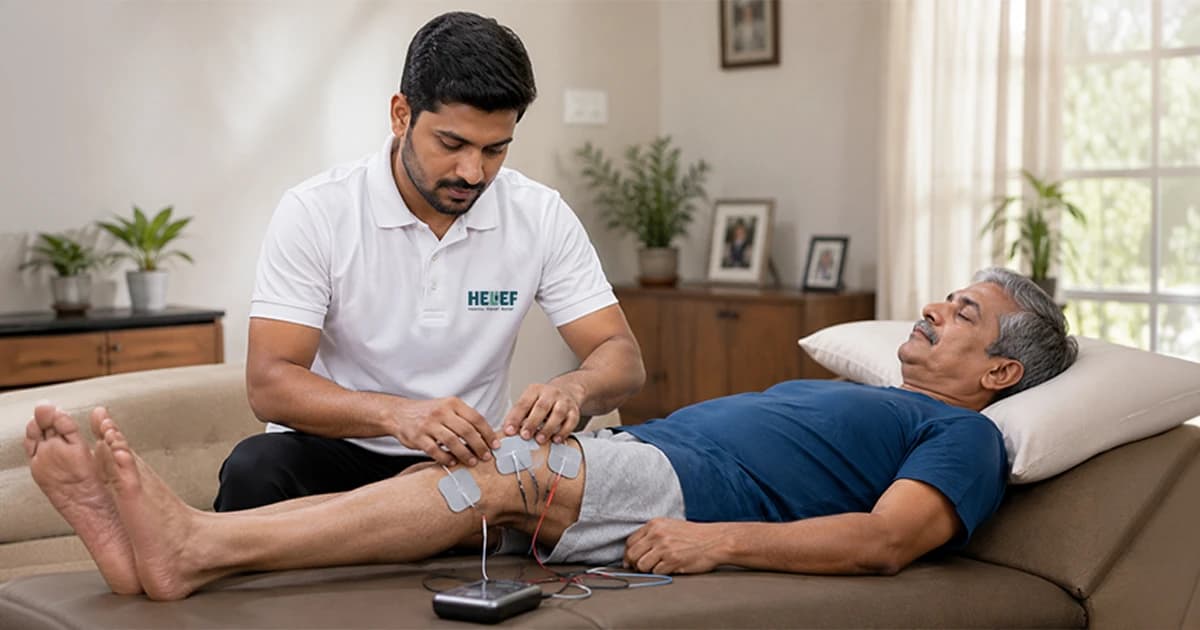
Most people who book a home physiotherapy session don't know exactly what to expect. They know they're in pain, or they're recovering from surgery, or they're managing a parent's care — and someone told them they need physiotherapy. But what actually happens when the physiotherapist arrives?
This guide answers that question plainly.
Before the Session: What to Prepare
You don't need to do much. A few things help:
Have any relevant medical records accessible. Discharge summaries from hospital, recent scan reports (X-ray, MRI), prescription lists, and any referral letters from a doctor. Your physiotherapist doesn't need to read through everything in detail, but having them available means the assessment is more informed and efficient.
Clear a small space. For a functional assessment, the physiotherapist needs enough room for the patient to stand, walk a few steps, and move their limbs. A cleared area of roughly two to three metres is enough — you don't need to rearrange furniture.
Wear comfortable clothing. Loose clothes that allow easy access to the affected area. For a knee assessment, shorts are ideal. For a shoulder or back assessment, something that can be easily adjusted.
Write down your main concerns. It sounds simple, but people often forget things during appointments. A short list of what hurts, when it hurts, and what makes it better or worse helps the physiotherapist understand your situation quickly.
The Assessment: What the Physiotherapist Is Looking For
The first session is always an assessment before it is a treatment. This is deliberate — and it's worth understanding why.
A physiotherapist who skips straight to treatment without understanding the underlying problem is guessing. The assessment is what separates targeted, effective therapy from generic exercises that may not help and could occasionally make things worse.
Subjective Assessment
This is a structured conversation. The physiotherapist will ask:
- What is the main problem? Where is the pain? How would you describe it — sharp, dull, aching, burning?
- When did it start? Was there a specific incident (a fall, a surgery, an injury) or did it develop gradually?
- What makes it worse? What makes it better? Movement, rest, heat, cold, time of day?
- How is it affecting daily life? Which specific activities are you unable to do, or doing with difficulty?
- What have you already tried? Medication, previous physiotherapy, self-treatment?
- What are your goals? Walking to the market again, going back to work, playing with grandchildren — knowing the end goal shapes the treatment plan.
This conversation typically takes 10 to 15 minutes. It might feel like a lot of questions, but each answer genuinely shapes what happens next.
Objective Assessment
Now the physiotherapist observes and tests directly. What this involves depends on the condition, but common elements include:
- Range of motion testing — how far can the joint move in each direction? Is movement limited by pain, stiffness, or weakness?
- Strength testing — asking the patient to push or pull against gentle resistance to identify which muscles are weak
- Palpation — the physiotherapist uses their hands to feel for areas of tenderness, tightness, swelling, or abnormal tissue texture
- Neurological tests — where relevant (back pain with leg symptoms, for example) tests of reflexes and sensation to check whether nerves are involved
- Functional movement — watching how the patient actually moves: walking, getting up from a chair, reaching overhead
The physiotherapist is building a clinical picture — not just of where it hurts, but of why.
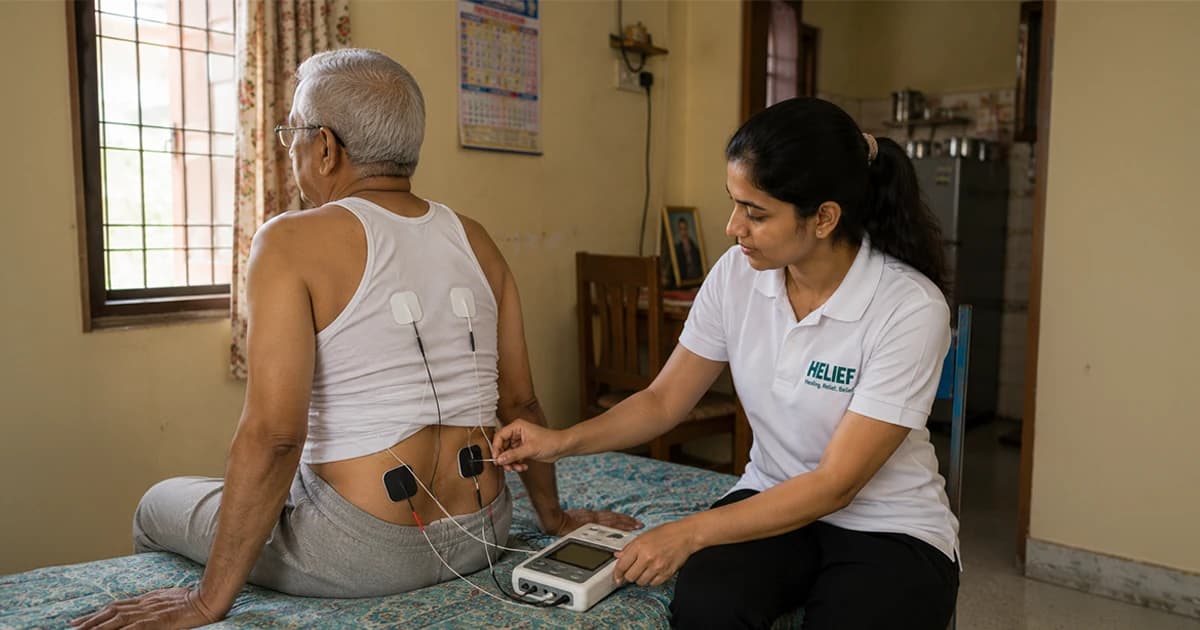
The Diagnosis and Explanation
At the end of the assessment, the physiotherapist will explain what they found. This is often the most valuable part of the first session for patients and families.
A good explanation answers three questions:
- What is actually happening? Not just "back pain" but "the muscles supporting your lower back have become weak, and you're compensating by overloading the joints — that's what's causing the pain."
- What does treatment look like? How many sessions, how often, what will happen in each one, what will you need to do between sessions?
- What can you realistically expect? An honest timeline for improvement, including what's likely to get easier first and what takes longer.
You should leave the first session understanding your condition better than when the physiotherapist arrived. If you don't — if you're still confused about what's wrong or why the proposed treatment will help — ask. A good physiotherapist welcomes that question.
Treatment in the First Session
Depending on time and the nature of the condition, the physiotherapist may begin treatment in the first session — often manual therapy (hands-on work to reduce pain or improve joint movement) and teaching the first exercises. Or they may recommend starting treatment from session two, once they've had time to review what they found and design the right programme.
Either approach is reasonable. What matters is that treatment is based on the assessment, not delivered before it.
How Many Sessions Will You Need?
This varies enormously depending on the condition:
- Acute injury (a recent muscle strain, mild sprain): often four to six sessions over three to four weeks
- Post-surgery recovery (knee replacement, hip replacement): typically 12 to 16 sessions over six to eight weeks, tapering as independence returns
- Chronic conditions (long-standing back pain, frozen shoulder): usually eight to twelve sessions over two to three months, with reassessment at each milestone
- Neurological conditions (stroke, Parkinson's): often ongoing, with frequency varying by phase of recovery
The physiotherapist will give you an estimate at the end of the first session. This is an estimate, not a contract — recovery is not perfectly predictable — but an experienced physiotherapist's estimate is usually reasonably accurate.
What You're Paying For
One thing worth saying clearly: home physiotherapy is not just a clinic visit done in your living room. The assessment of how you function in your actual home environment, the ability to work on the specific movements you need to manage your specific space, and the convenience of consistent sessions without the burden of travel — these are real clinical advantages, not just conveniences.
Patients who complete their full course of home physiotherapy almost always progress faster and more completely than those who attend sporadically or stop early. The sessions work cumulatively.
Booking Your First Session in Bangalore
Helief physiotherapists visit patients across Bangalore — Indiranagar, JP Nagar, Koramangala, Jayanagar, HSR Layout, Whitefield, and more.
To book, simply fill in the enquiry form, tell us a little about the condition and location, and one of our team will call you back to schedule the first session at a time that works for the patient and family. Sessions are available from early morning to evening, including Saturdays.
There's no obligation after the first session. If the assessment doesn't give you clarity and a clear plan, you don't owe us anything.