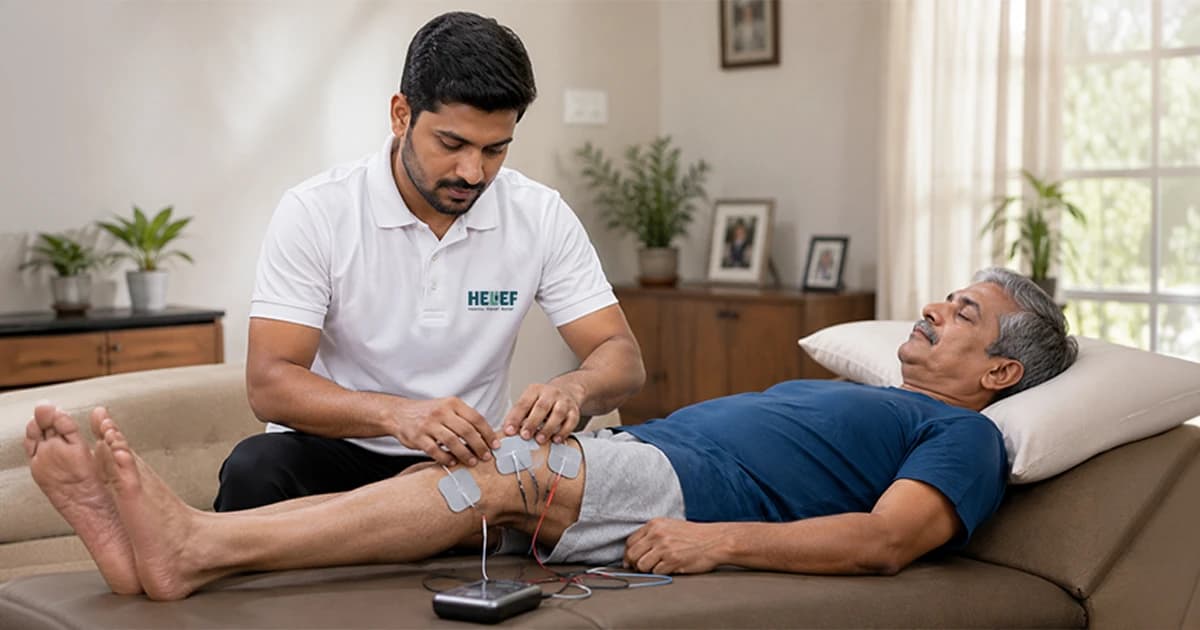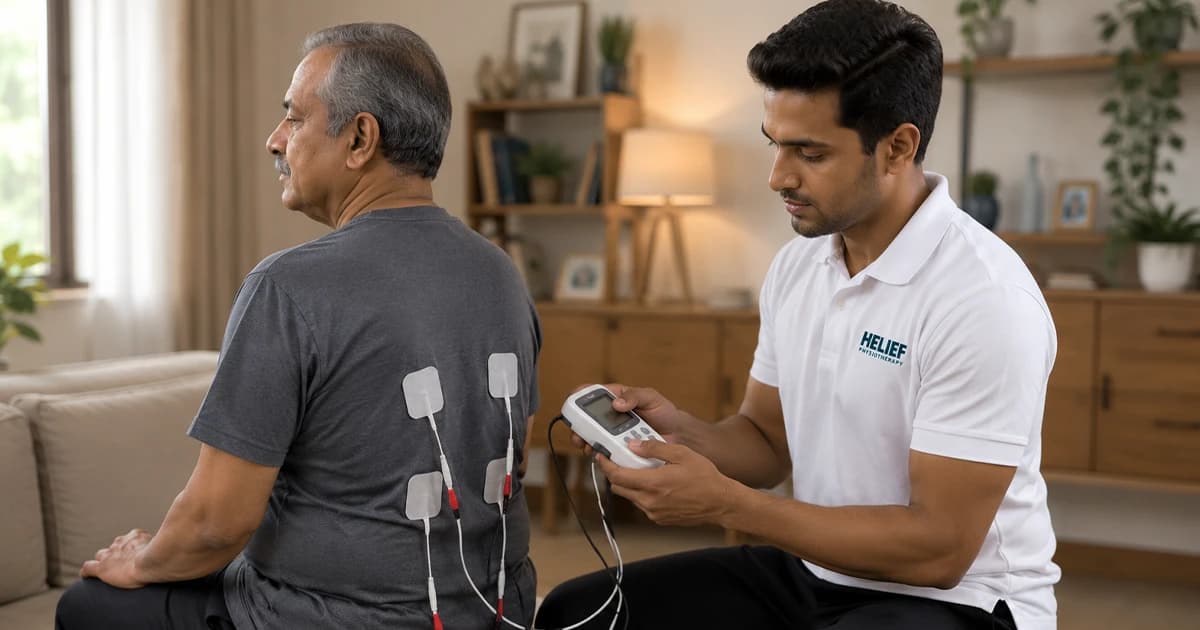
Most people with chronic back pain have already tried the obvious things. They've rested. They've taken painkillers. They've bought a new mattress. They've tried hot water bottles and cold packs and every combination of the two. The pain improves for a few days, then comes back.
This is frustrating — but it makes complete sense once you understand what's actually causing the pain.
Back pain almost never originates from a single, obvious source. It develops over time, driven by a combination of muscle imbalances, postural habits, joint stiffness, and in some cases, nerve involvement. Painkillers reduce the sensation of pain. Rest reduces inflammation temporarily. But neither addresses the underlying structural problem, which is why the pain keeps returning the moment you go back to normal life.
Orthopedic physiotherapy takes a different approach. Instead of managing symptoms, it works backwards from the question: why does this specific person's back hurt?

What's Actually Causing Your Back Pain
There are a few common culprits, and identifying yours is the first step to fixing it.
Weak core muscles are probably the most common cause of chronic lower back pain. The core isn't just your stomach — it's the deep muscle system that stabilises your spine. When these muscles aren't doing their job, your vertebrae take excess load with every movement, every step, every time you lean forward to pick something up.
Tight hip flexors and hamstrings are the next most common cause, especially in people who sit for long periods. When these muscles are chronically tight, they pull the pelvis out of alignment, which changes the curve of the lower spine and creates compression and strain.
Poor movement habits built up over years — the way you sit at your desk, the way you sleep, the way you lift — gradually stress the same structures day after day until they become inflamed and painful.
Nerve involvement (sciatica) happens when a disc bulge or inflamed tissue presses on a nerve root, causing pain that often travels down one leg. This is frequently misunderstood as leg pain or hip pain when the actual source is in the lumbar spine.
A physiotherapist's job in the first session is to figure out which of these is your primary driver — because the treatment approach is different for each.
What Actually Happens During a Home Physiotherapy Session
The first session is an assessment. Your physiotherapist will ask you detailed questions about your pain — when it's worst, what makes it better, how long you've had it — and then watch you move. Standing, sitting, bending, walking. They're looking for the movement pattern that's driving the problem.
From that assessment, they'll know exactly what kind of hands-on work your back needs and what exercises will be most effective for your specific situation.
Hands-on Manual Therapy
In the first few sessions, manual therapy usually provides the most immediate relief. This includes:
- Soft tissue work on the muscles around the spine — the erector spinae, quadratus lumborum, and glutes — to release the tension that's compressing the joints
- Joint mobilisation of stiff lumbar segments, which improves range of motion and reduces pain quickly
- Nerve mobilisation techniques for patients with sciatica, helping restore normal nerve movement through the surrounding tissue
Most patients feel a meaningful improvement in pain after two or three sessions of manual therapy alone.
Exercise Rehabilitation
Once pain is under better control, the programme shifts to fixing the underlying cause. This is where the lasting results come from.
Your physiotherapist will teach you specific exercises — usually 5 to 8 movements done daily — designed to strengthen the muscles that should be supporting your spine and release the ones that are pulling it out of position. These are done at home, with no equipment, and progress over weeks as your body adapts.
This isn't generic "back exercises from YouTube." Every exercise is chosen for your specific muscle pattern and your specific pain presentation.
Lifestyle and Posture Adjustment
One of the biggest advantages of home physiotherapy is that your physiotherapist can see how you actually live. They can look at your desk setup, your chair, the height of your bed, how you sit when you eat. Small changes to these environments — a cushion here, a monitor raised by a few centimetres — can significantly reduce the daily load on your spine between sessions.
How Long Does It Take?
For most people with back pain that's been present for more than a month, meaningful improvement happens within three to six weeks of consistent physiotherapy — typically eight to twelve sessions. More complex cases involving disc problems or nerve pain may take twelve to sixteen sessions.
This is worth putting in perspective: most people with chronic back pain have been managing it with painkillers for months or years. Eight sessions of physiotherapy over a month is a small investment for lasting relief.
Back Pain That Becomes Chronic Pain
Sometimes back pain doesn't resolve in a straightforward way — it persists, spreads, or becomes more complex, affecting mood, sleep, and day-to-day function. When this happens, a broader chronic pain rehabilitation approach may be needed, which combines physiotherapy with education around pain science and graded activity.
If you've been living with back pain for more than three months, this is worth discussing with your physiotherapist at the initial assessment.
Who Benefits Most from Home Physiotherapy for Back Pain
Home visits are especially practical if:
- You work from home and your pain is clearly linked to how you sit during the day
- Travelling to a clinic is painful or logistically difficult
- You're recovering from back surgery and need rehabilitation before you can move comfortably outside
- You're an elderly patient with additional conditions that make clinic visits complicated
We cover home physiotherapy across Bangalore, from Indiranagar and Koramangala to JP Nagar, Jayanagar, and beyond.
The back pain you've been managing for months — it's not something you have to live with indefinitely. The first step is understanding why it's there. A free home assessment does exactly that, with no commitment required.