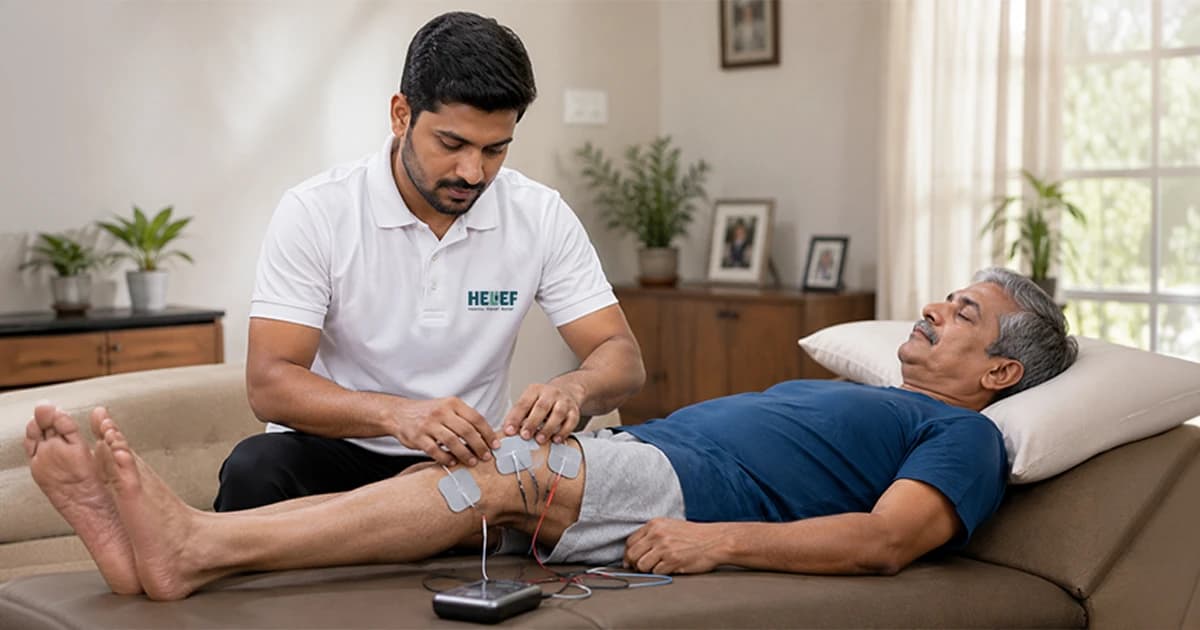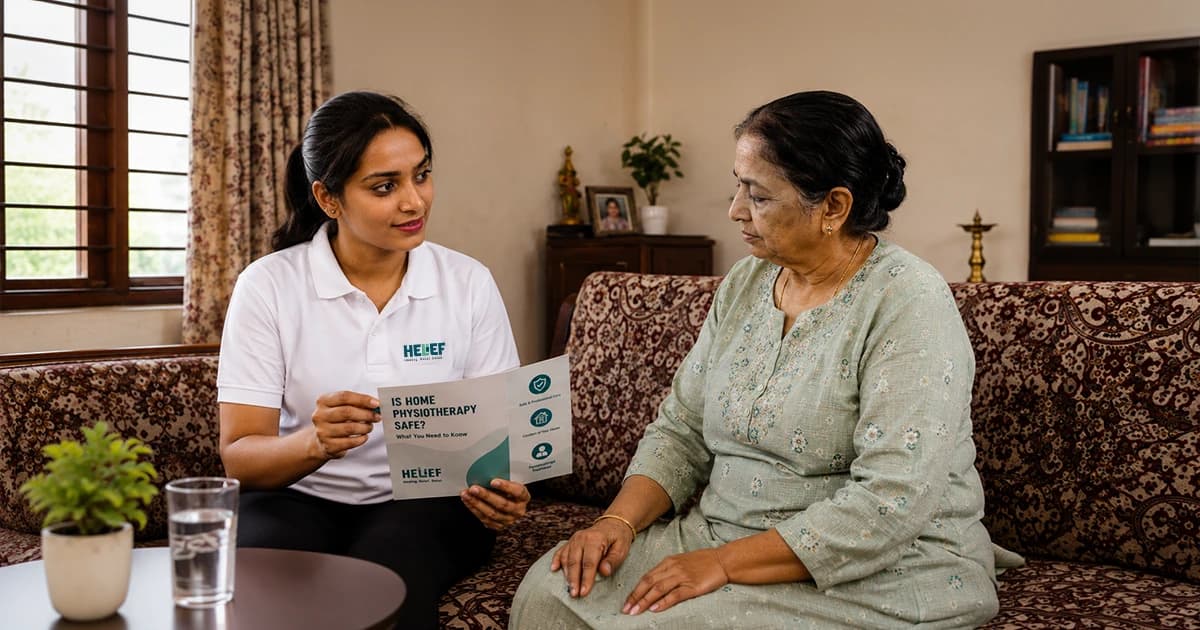
Safety is a reasonable concern when you're inviting a healthcare professional into your home to treat someone you love. The short answer is yes — home physiotherapy is safe when performed by a properly qualified and experienced physiotherapist. But there are important things to check, and corners that some providers cut that families should know about.
This guide covers what makes home physiotherapy safe, what to verify before booking, and what warning signs should make you look elsewhere.

Is Home Physiotherapy Clinically Safe?
Yes. Physiotherapy — whether delivered in a clinic or at home — is one of the safest forms of healthcare. It uses physical methods: guided exercise, manual therapy, education, and where appropriate, therapeutic technology. These are not invasive procedures, and when calibrated correctly by a trained clinician, they carry minimal risk.
In fact, for many patient groups, home physiotherapy reduces risk rather than adding it:
- Post-surgical patients avoid the physical stress of travelling in a car with a recently operated joint
- Elderly patients avoid the fall risk of navigating unfamiliar clinic environments
- Neurological patients avoid the exhausting and sometimes disorienting experience of clinic transport
- Dementia patients remain in the familiar environment where they are safest and most cooperative
The risk in home physiotherapy doesn't come from the home setting itself — it comes from whether the physiotherapist is properly qualified and applying the right treatment for the right condition.
What Makes Home Physiotherapy Safe
1. A Qualified Physiotherapist
In India, physiotherapy is a regulated profession. A qualified physiotherapist holds a Bachelor of Physiotherapy (BPT) degree — a four-and-a-half-year undergraduate clinical degree — from a recognised institution. Some physiotherapists have further postgraduate qualifications (MPT) in specialised areas.
Always confirm that the physiotherapist treating your family member holds a BPT degree. Ask directly. A qualified physiotherapist will confirm this without hesitation.
2. A Proper Assessment Before Treatment
Safe physiotherapy begins with a thorough assessment — not with immediate treatment. The assessment identifies the diagnosis, the patient's current physical status, any contraindications to specific techniques, and the goals of treatment.
Skipping the assessment and going straight to treatment is how physiotherapy causes problems. It turns clinical care into guesswork.
Any home physiotherapy provider worth trusting will always begin with a proper assessment session.
3. Appropriate Treatment for the Condition
Some physiotherapy techniques are contraindicated in certain conditions. Manual mobilisation of certain joints is inappropriate directly after some fractures. High-intensity exercise is inappropriate in certain cardiac conditions. Heat therapy is contraindicated in some inflammatory stages.
A trained physiotherapist knows these contraindications and works within them. This is part of clinical training and professional responsibility.
4. Communication With the Medical Team
For post-surgical and complex medical cases, a home physiotherapist should respect the guidelines set by the treating surgeon or doctor and work within those parameters. If there are specific restrictions — for example, weight-bearing restrictions after a hip replacement — a qualified physiotherapist will know to observe these and will not pressure the patient beyond safe limits.
5. Clear Monitoring and Progression
Safe physiotherapy progresses at the right rate for the patient's recovery. A competent physiotherapist monitors response to treatment — does pain reduce, does range of motion improve, is there any swelling or adverse reaction — and adjusts accordingly.
Warning Signs to Watch Out For
Unqualified Practitioners
Some home visit services that market as "physiotherapy" in Bangalore send staff who are not qualified physiotherapists — they may be trained in massage, yoga, or physical fitness but do not hold a BPT degree and have not undergone clinical training. This is the biggest safety risk in home physiotherapy.
Always ask: "Is the person visiting me a qualified BPT physiotherapist?" If the answer is vague or avoidant, look elsewhere.
No Assessment Before Treatment
If a provider agrees to start treatment before conducting a proper assessment — or charges for a very short "assessment" that involves no clinical testing — this is a red flag. Treatment without assessment is not clinical physiotherapy.
Exercises That Cause Sharp Pain
Some discomfort during physiotherapy is normal and expected. Sharp, acute pain is not. A physiotherapist who pushes through pain complaints, dismisses reports of sharp pain, or applies techniques that produce severe pain is not working safely. It's appropriate to stop and question what is happening.
Excessive Passive Treatment
Effective physiotherapy involves active participation from the patient — exercises, movements, functional activities. A physiotherapy course that consists primarily of passive treatments (massage, heat, TENS) with little exercise or active engagement is often not clinically effective and is a sign of a less-capable provider.
Home Physiotherapy Safety for Specific Patient Groups
Elderly Patients
For elderly patients, the main safety considerations are fall risk during exercises and appropriate intensity calibration. A good physiotherapist assesses fall risk explicitly at the first session and designs exercises that challenge but do not endanger the patient. They will also assess the home environment and recommend modifications that reduce everyday fall risk. See our guide on 5 signs your elderly parent needs a home physiotherapist.
Post-Surgical Patients
Safety for post-surgical patients revolves around respecting healing timelines — not mobilising a joint beyond what the surgical repair can tolerate, not loading a graft or fixation too early. This requires both a proper understanding of the surgical procedure and experience in post-operative rehabilitation. See our guide on post-surgery recovery at home.
Stroke and Neurological Patients
For stroke patients, safety involves appropriate management of spasticity, positioning to prevent pressure sores, and ensuring that exercises promote correct movement patterns rather than reinforcing compensatory ones. Neurological physiotherapy requires specific clinical training.
Dementia Patients
Safety for dementia patients includes managing confused or resistant behaviour with patience and expertise, avoiding techniques that cause distress, and coaching family members in safe handling techniques. See our service page on dementia care at home.
Frequently Asked Questions
Can home physiotherapy make a condition worse? Incorrect or inappropriate physiotherapy can delay recovery or, in rare cases, cause harm — but this is a risk with any physiotherapy, not specifically home physiotherapy. The risk is reduced significantly by choosing a qualified physiotherapist who begins with a proper assessment.
Should I be present during my family member's home physiotherapy session? For elderly patients, post-surgical patients, and children, having a family member present — especially in the first few sessions — is often helpful. The physiotherapist can demonstrate exercises for the family to assist with between sessions. For most adult patients with straightforward conditions, family presence is optional.
What should I do if I'm concerned about something during a session? Stop the session and raise your concern. A qualified physiotherapist will explain what they're doing and why. If the explanation is not satisfactory, you have every right to pause and get a second opinion.
Are home physiotherapists insured? They should be. Professional indemnity insurance is standard for practising physiotherapists. You can ask the provider whether their physiotherapists are covered.
What if the patient has multiple conditions — is home physiotherapy still safe? Yes — in fact, a home physiotherapist working with a patient who has multiple conditions (for example, a diabetic patient with a stroke, or an elderly patient with osteoporosis and a recent fracture) has the advantage of seeing the full clinical picture and adapting accordingly. Disclose all relevant medical history at the assessment.
Helief's home physiotherapy services in Bangalore are delivered exclusively by BPT-qualified physiotherapists with relevant clinical experience. Every visit begins with a proper assessment. We work transparently with families and always within the guidelines of the patient's medical team.
Book a home visit across Bangalore — and if you have questions about whether home physiotherapy is right for your family member's specific situation, contact us and we'll give you an honest answer.